Robust. Field-proven. Still supported.
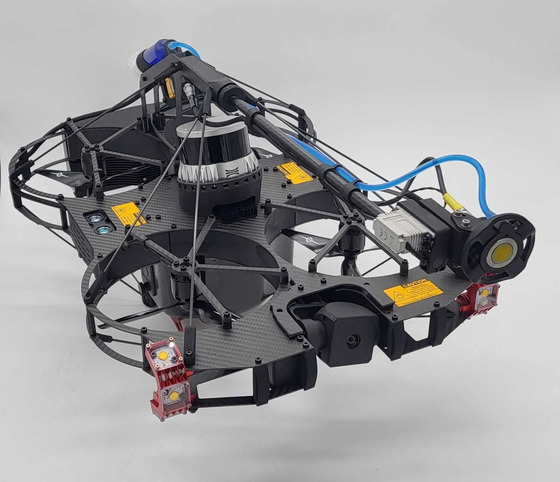
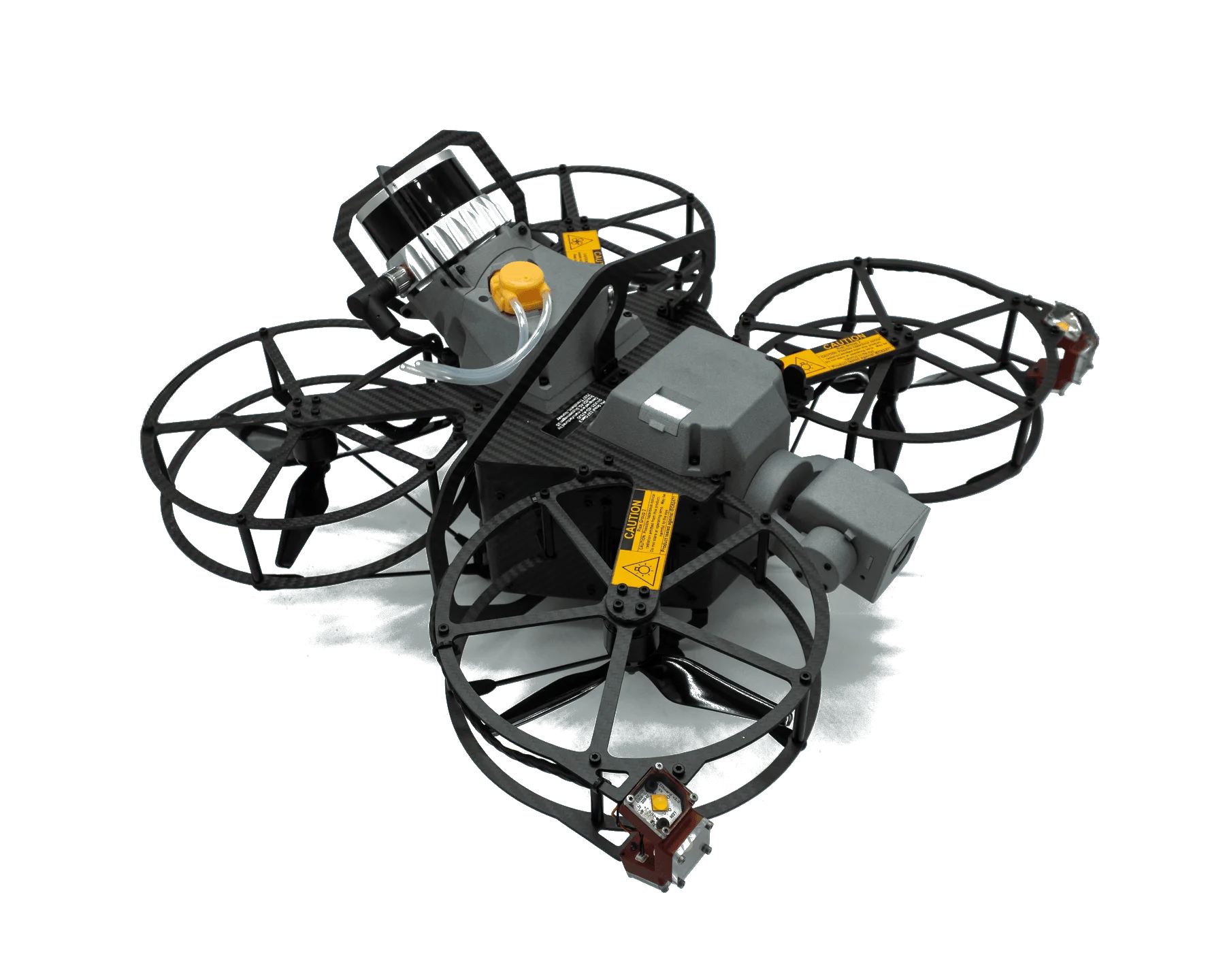
Scout 137 Gen 2 is the inspection drone that built ScoutDI’s original customer base. Fleets worldwide are still flying it in production, and ScoutDI commits to spare parts, calibration services and software updates.
What changed in Gen 3
Gen 3 doubles the LiDAR resolution (128 beams vs 64), upgrades to a 3.5× optical-zoom camera, extends the tether from 40 to 60 metres, adds the gas sensor as standard, and brings the Scout Companion app on a second tablet. The tether-powered architecture and the GPS-free flight controller carry straight over.
Gen 3 is a familiar step for any Gen 2 operator: same flight philosophy, more capable sensors.
What still works in Gen 2
Gen 2 has been used for routine inspection work across class, energy and maritime fleets for years. Those workflows do not need to change. If your team has the procedures, the platform and the spares, Gen 2 remains a working tool.
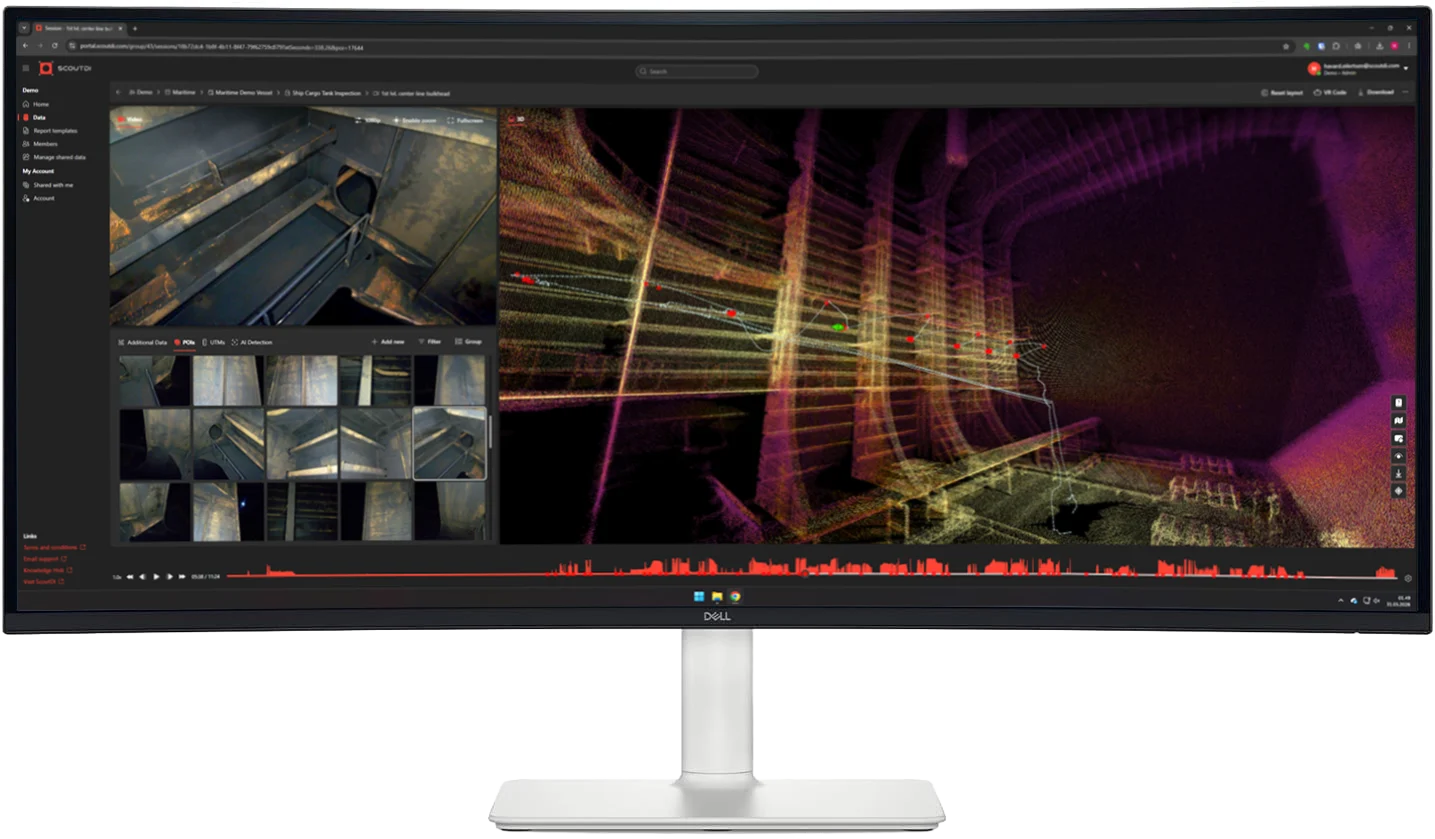
Scout Portal continues to receive feature updates relevant to Gen 2 data.
Long-term support
ScoutDI commits to keeping Gen 2 fleets airworthy: critical spare parts in stock, scheduled calibration in our service centre and via partners, security and stability updates to the Gen 2 software stack. Your existing fleet has a documented runway.
Motors, propellers, tether cables, filter and fastening kits held in inventory — the same parts the 50-hour maintenance and field-repair kits are built from.
Annual platform calibration available through the Trondheim service centre and qualified partners. Certificates land in Scout Portal.
When the time comes, Gen 3 builds on the same platform and flight controller. Talk to us or a partner to plan the step.
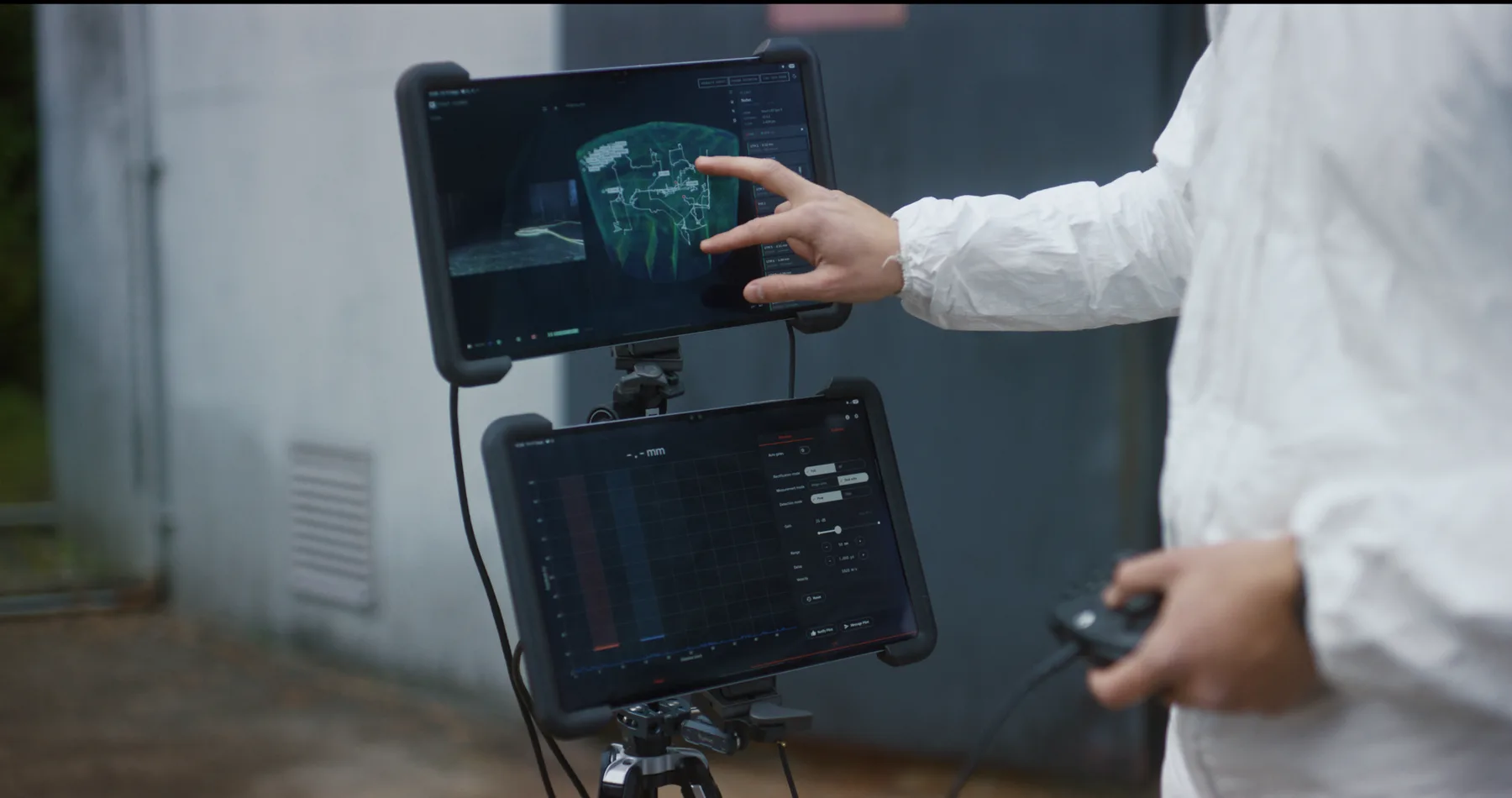
Pilot mounts the Gen 2 payload, runs pre-flight checks in the app on the pilot tablet, and confirms calibration is current.
Drone enters the asset. Onboard LiDAR locks the 3D map. The GPS-free flight controller holds position without satellites or beacons.
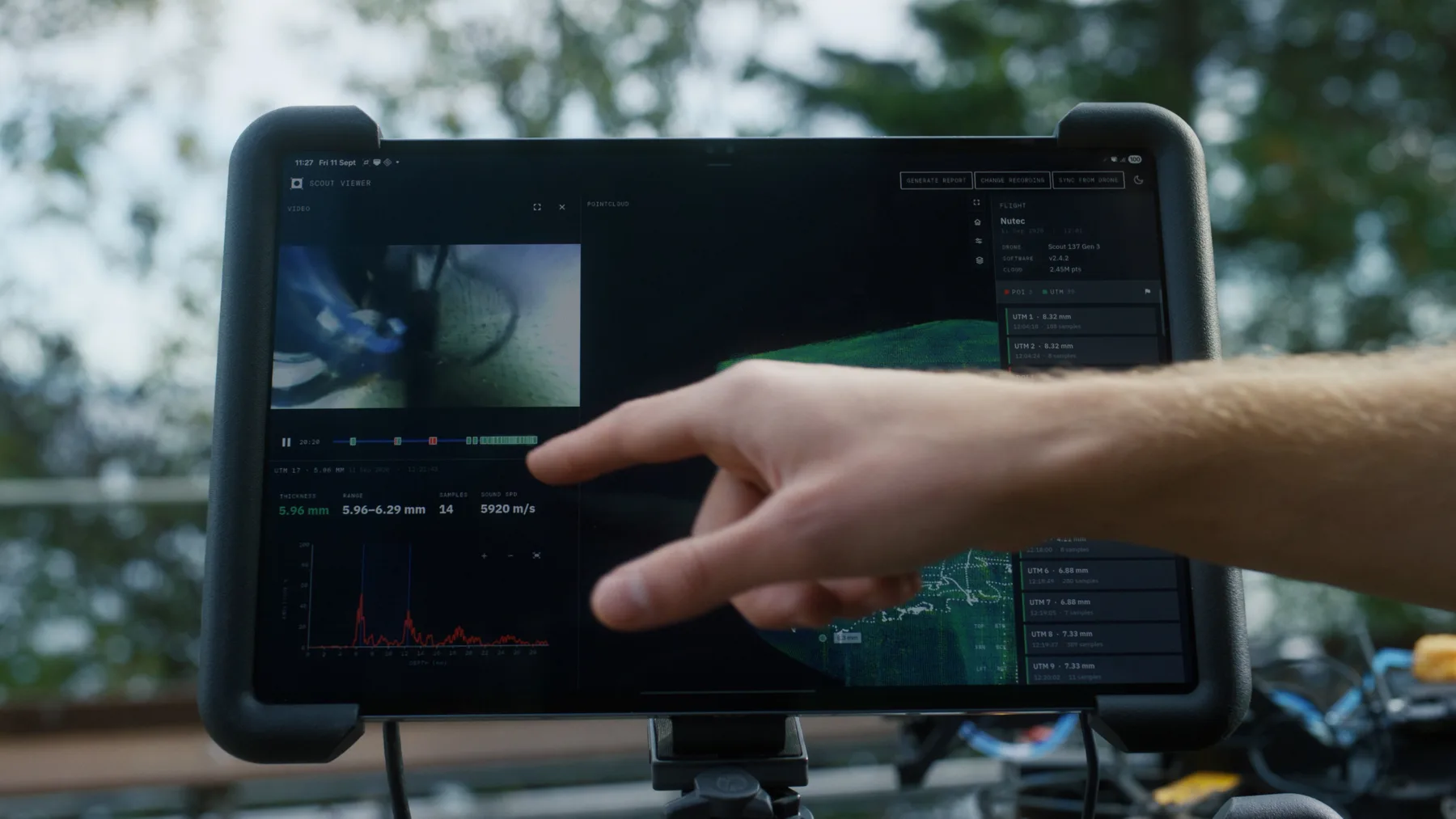
Pilot flies and follows the live feed on the tablet. Points of interest and measurements captured during the flight.
After the flight, upload the data to Scout Portal. Gen 2 captures live alongside Gen 3 captures in the same project.

Specifications
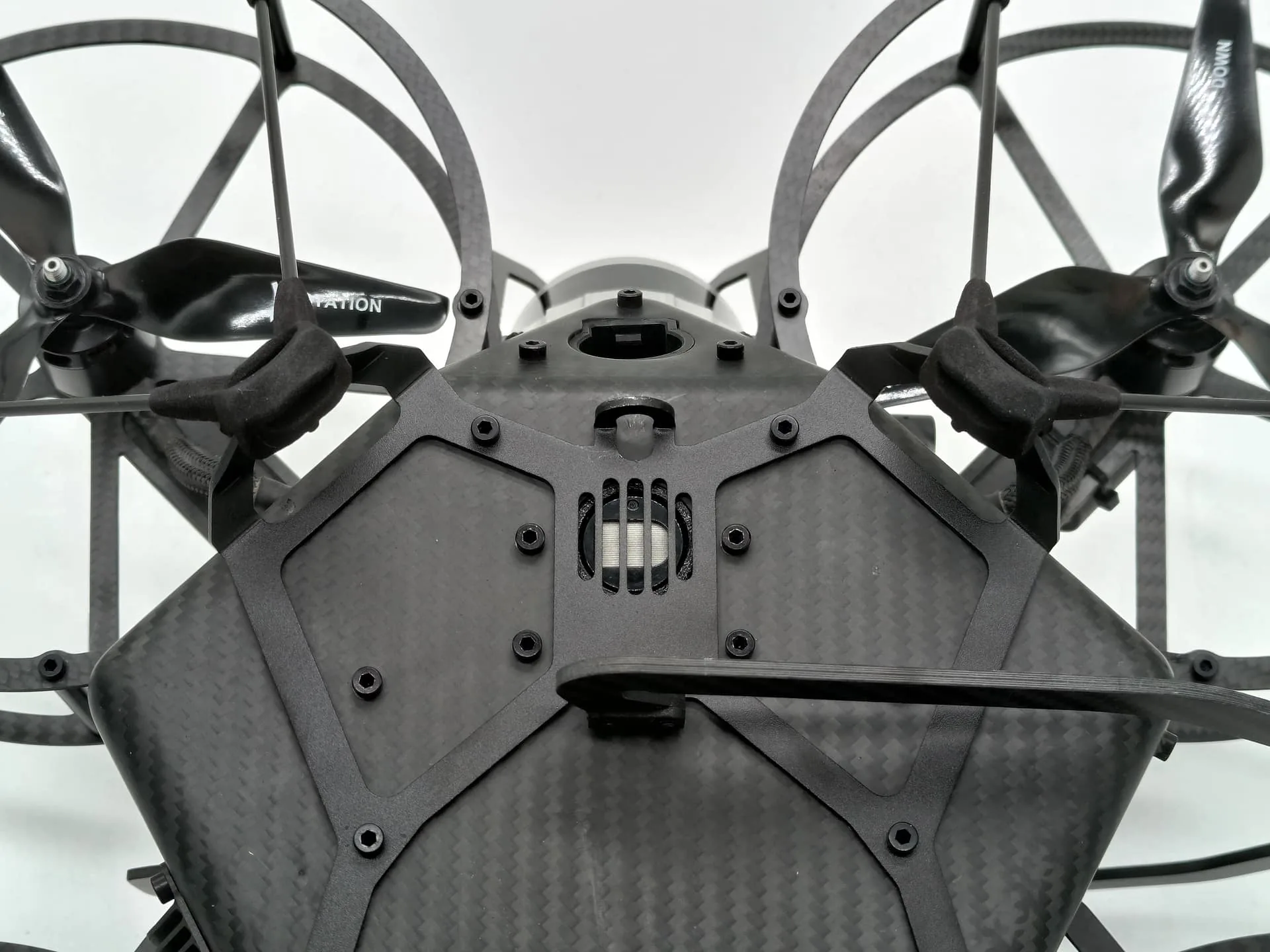
Dimensions: 613 × 382 × 303 mm
Weight: 3.3 kg
Power & communication: 40 m tether cable no flight battery no RF link
Endurance: Unlimited — tether-powered
Ingress protection: Designed to meet IP43
Operating temperature: −20 °C to +50 °C
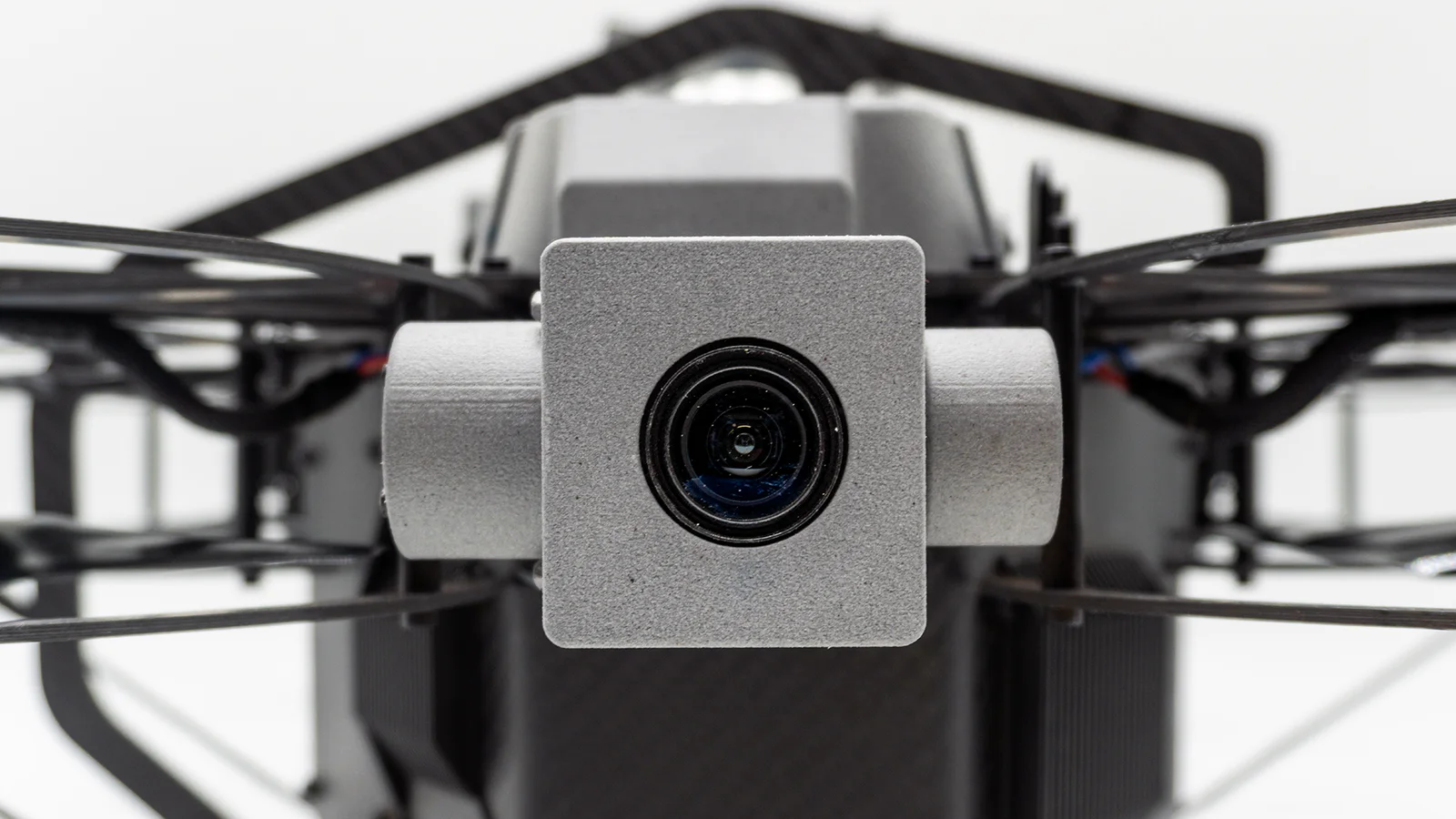
Resolution: 4K (3840 × 2160) recorded 720p live stream
Frame rate & FOV: 30 fps 88° / 56° (H / V)
Lens: Fixed focal length (no optical zoom)
Gimbal: 2-axis stabilised ±90° pitch
Storage: Micro SD up to 512 GB ≈ 20 hrs of flight (≈25 GB/hour)
Upload: Manual upload to Scout Portal after the flight
Positioning: GPS-free, LiDAR-based SLAM live 3D map on the pilot tablet
Onboard LiDAR: 64-beam 3D LiDAR
Horizontal sensing: 0.5 – 105 m 360°
Vertical sensing: 0.1 – 40 m 60° above horizon forwards, 30° backwards
Ground station: 385 × 440 × 245 mm 8.75 kg IP54 spec 200–240 V AC, 50/60 Hz, min 10 A
Tether: 40 m 12.8 g/m 400 V DC 80 Mbit/s data link 80 kg breaking strength polyurethane, Kevlar & copper
Lighting intensity: 12 000+ lumens
Structured lighting: Pre-set lighting schemes, or individual control
Tablet: Samsung Galaxy Tab Active Pro 5G 10.1″ 1920 × 1200 IP68
Controller: Razer Wolverine V2 USB-C wired
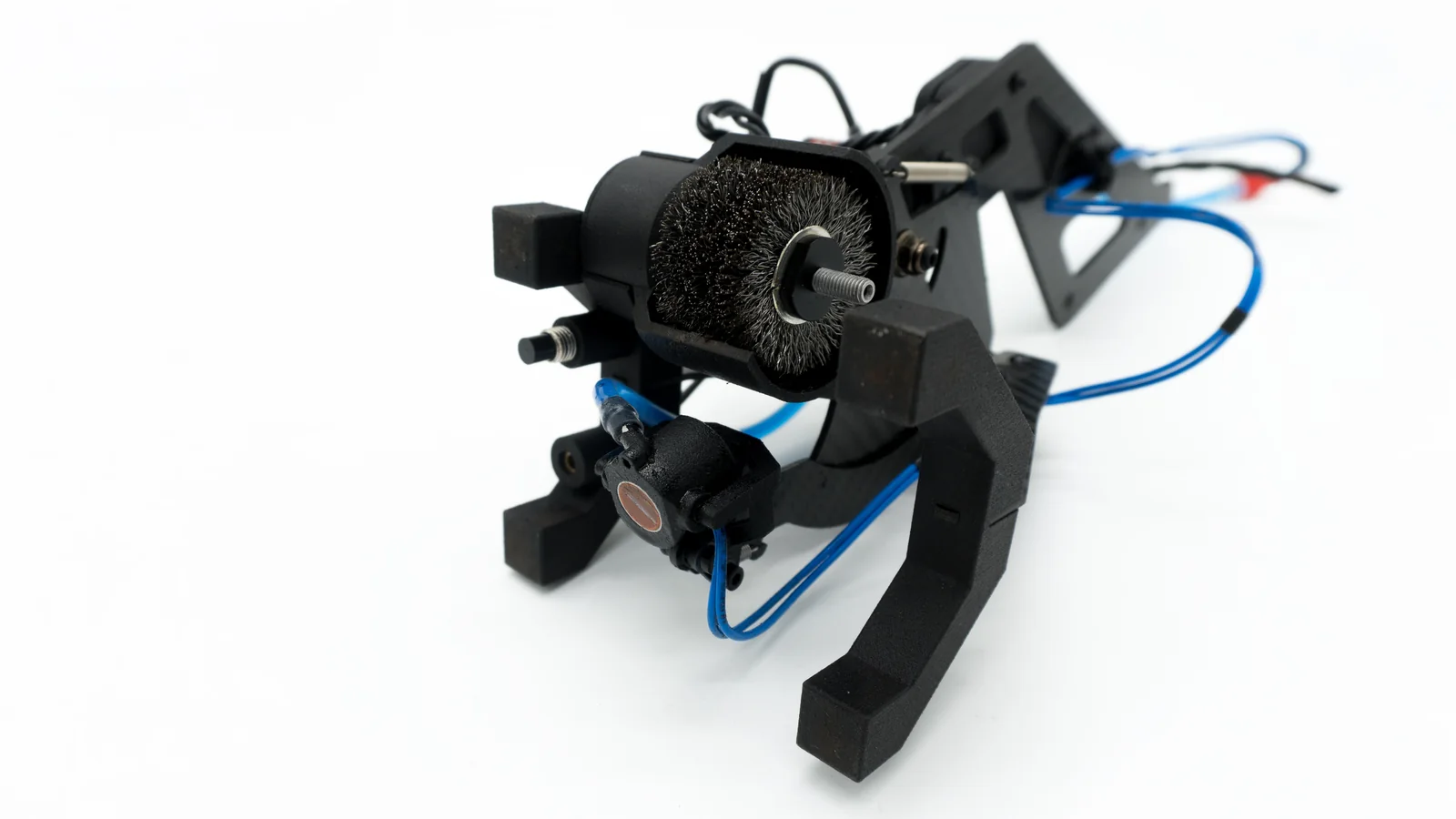
UTM payload:Supported single-crystal multi-echo 2.25 MHz probe standard (3.5 / 5.0 MHz on request) ±90° in-air adjustable, magnetic surface contact
Gas sensor: Optional add-on auto-calibrated warns the pilot with gas type and %LEL
RealSense 3D camera: Optional add-on high-density local point clouds for distance, angle and deformation measurement (not compatible with the UTM payload)