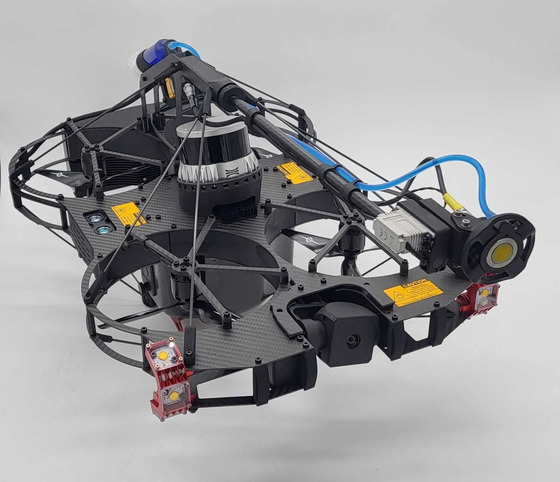
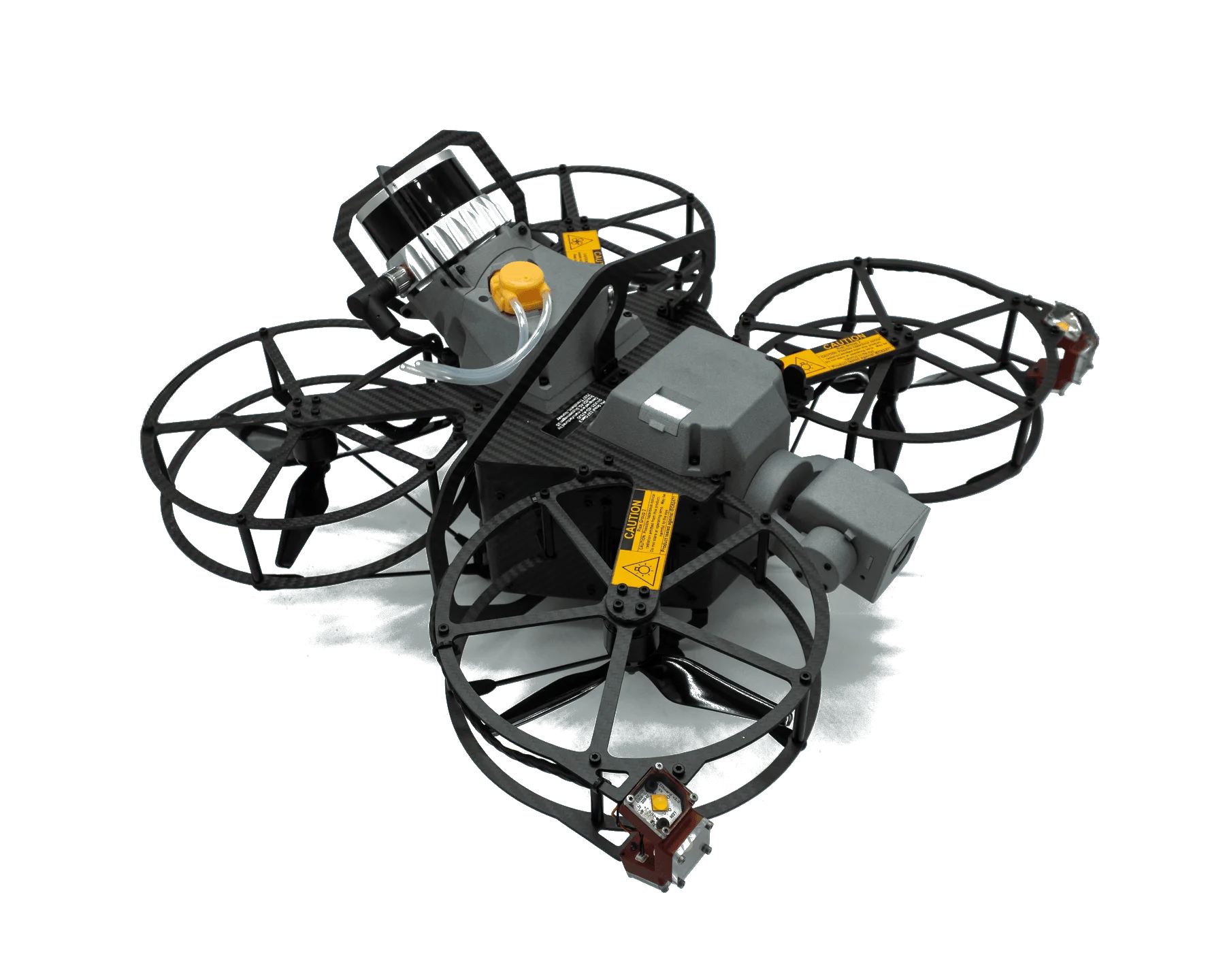
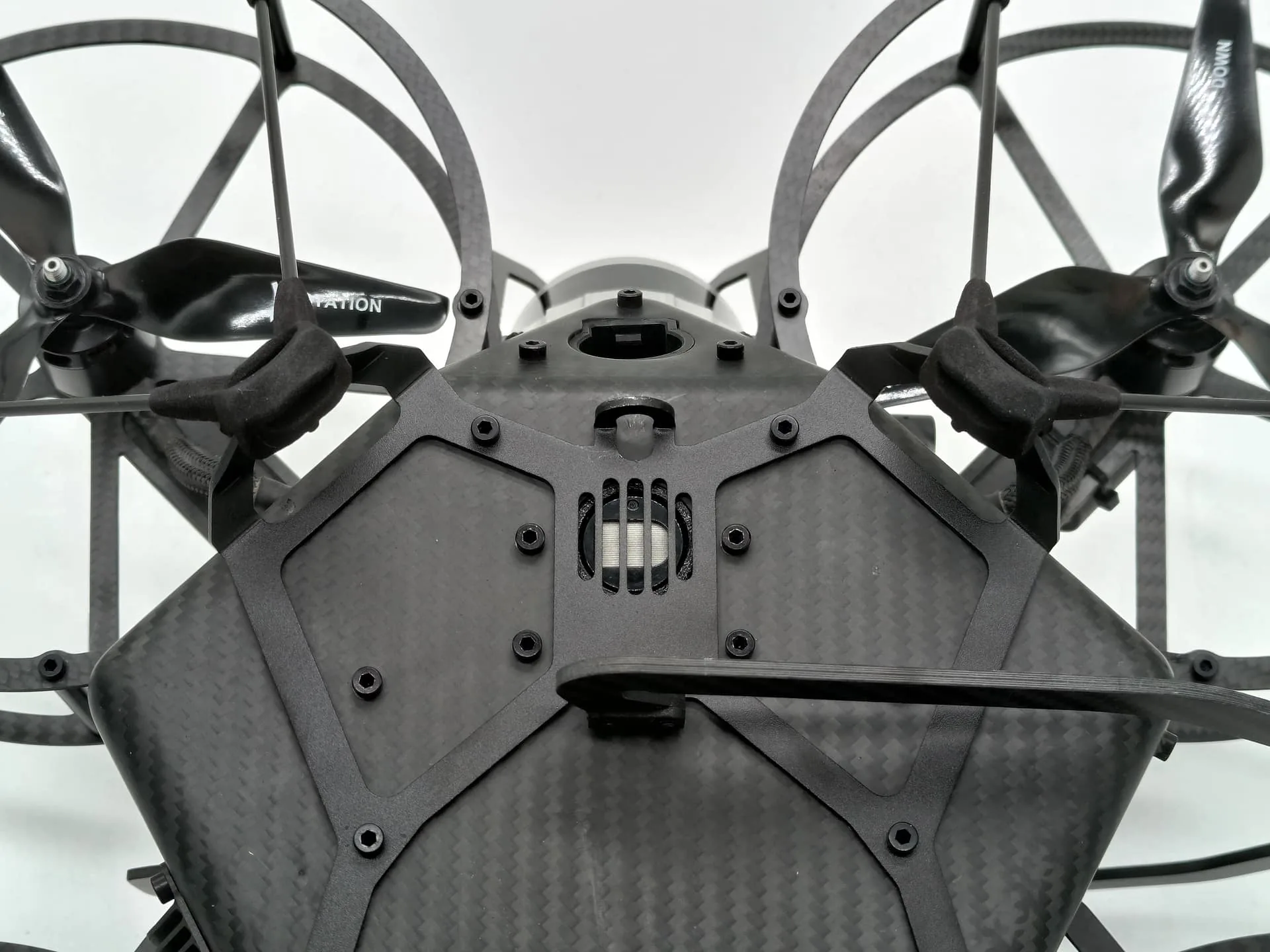
Dock once. Clean. Couple. Measure. One operation.
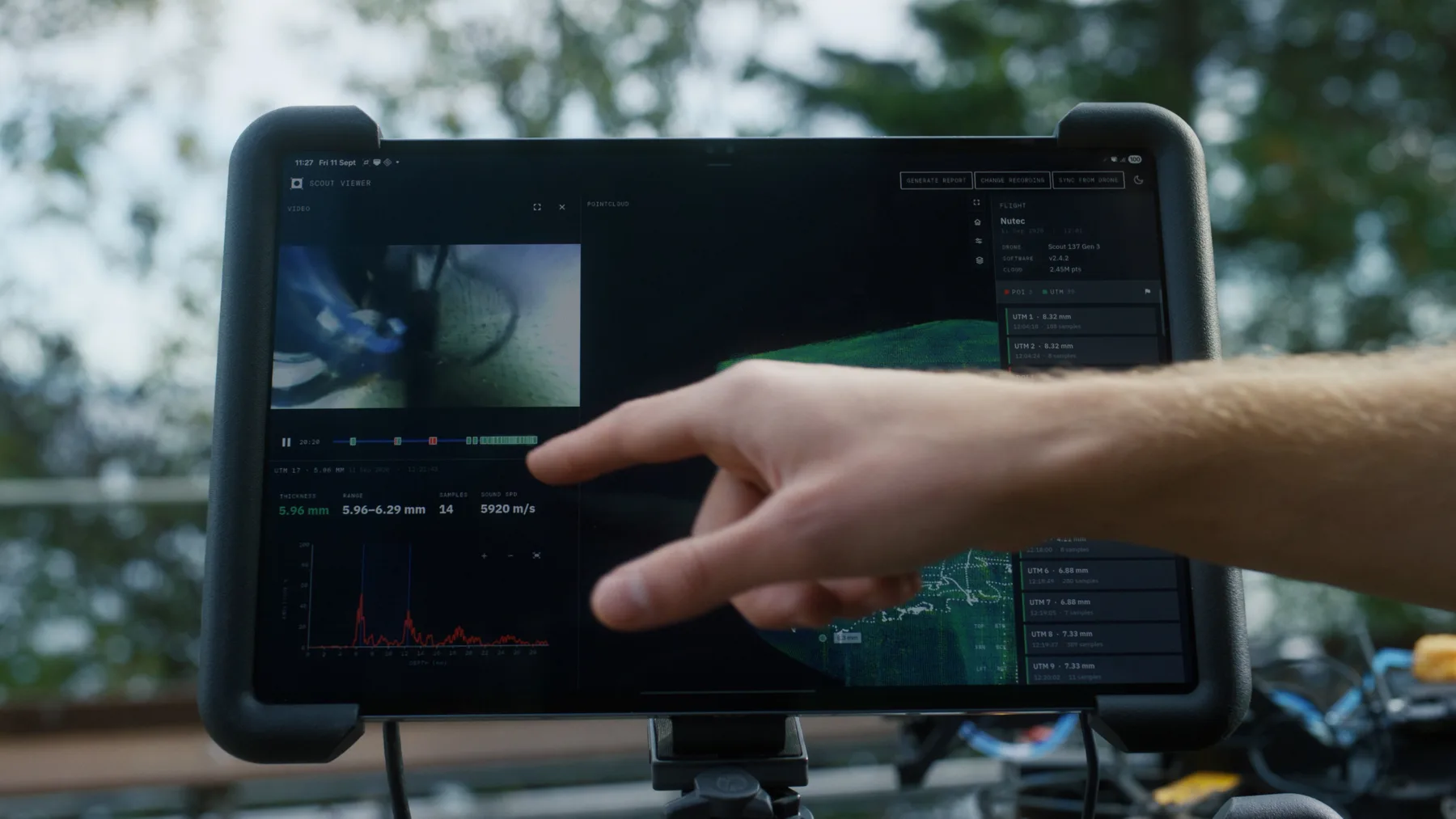
More coverage, more measurements, more confidence from the same NDT team. No technician needs to enter the confined space. Live readings on the dedicated tablet running Scout Companion, class-ready data the moment the flight ends.
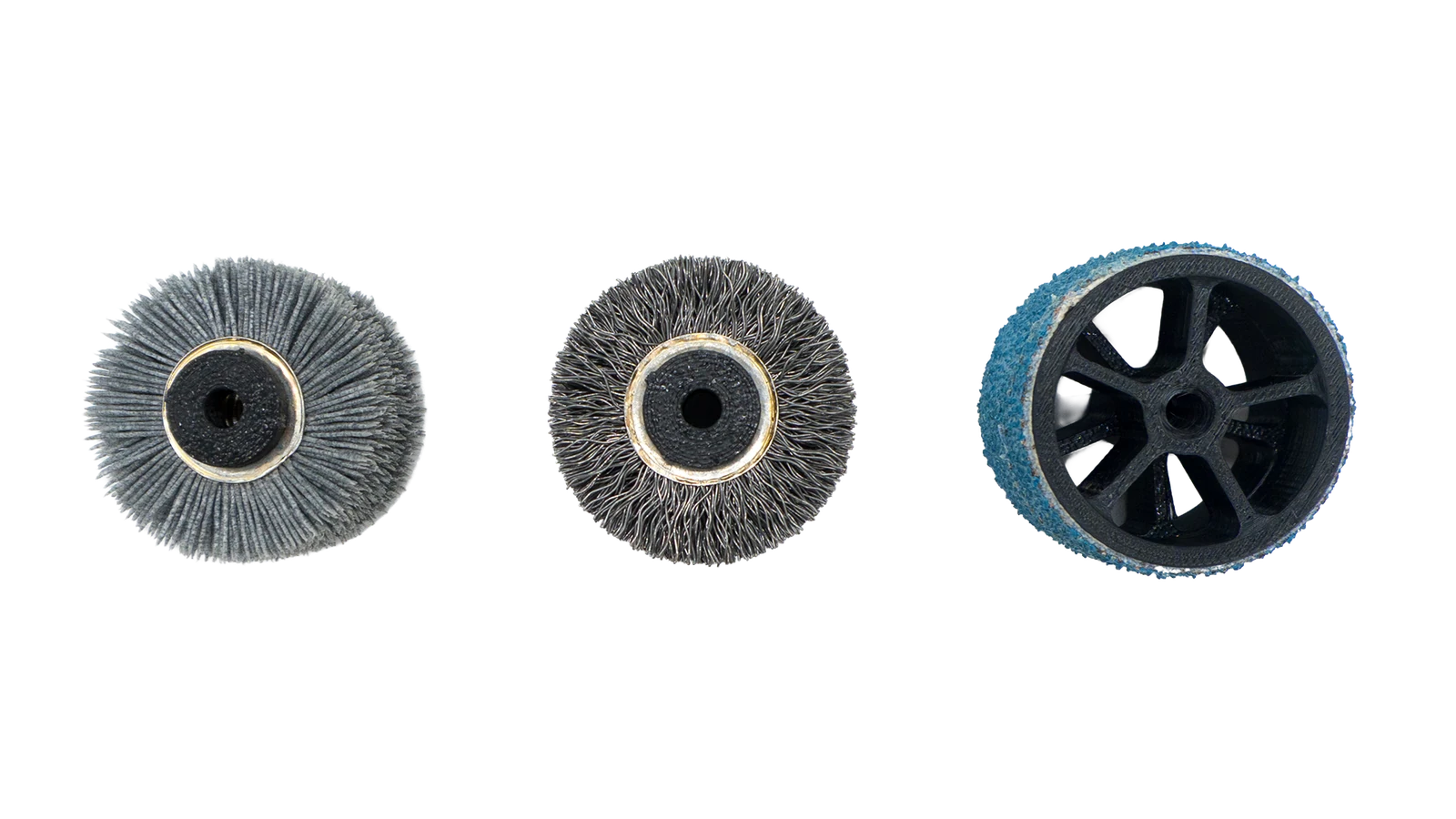
A good reading needs clean acoustic contact between probe and metal; the enemy is air, trapped in rust, oxide, coatings and paint. The motorised brush varies speed to the contamination, and three tool groups of increasing abrasive effect ship with the payload — ScoutBrush SiC (light cleaning), ScoutBrush Metal (rust and scale, field-verified through ISO 8501 grade C), and ScoutSleeve abrasive sleeves (hardened coatings, heavy oxide).
Start with the gentlest head that gives a usable A-scan and step up only when needed — the abrasive sleeves cut into the substrate itself if overused. Heads swap in seconds, so one payload preps any surface the plan calls for.
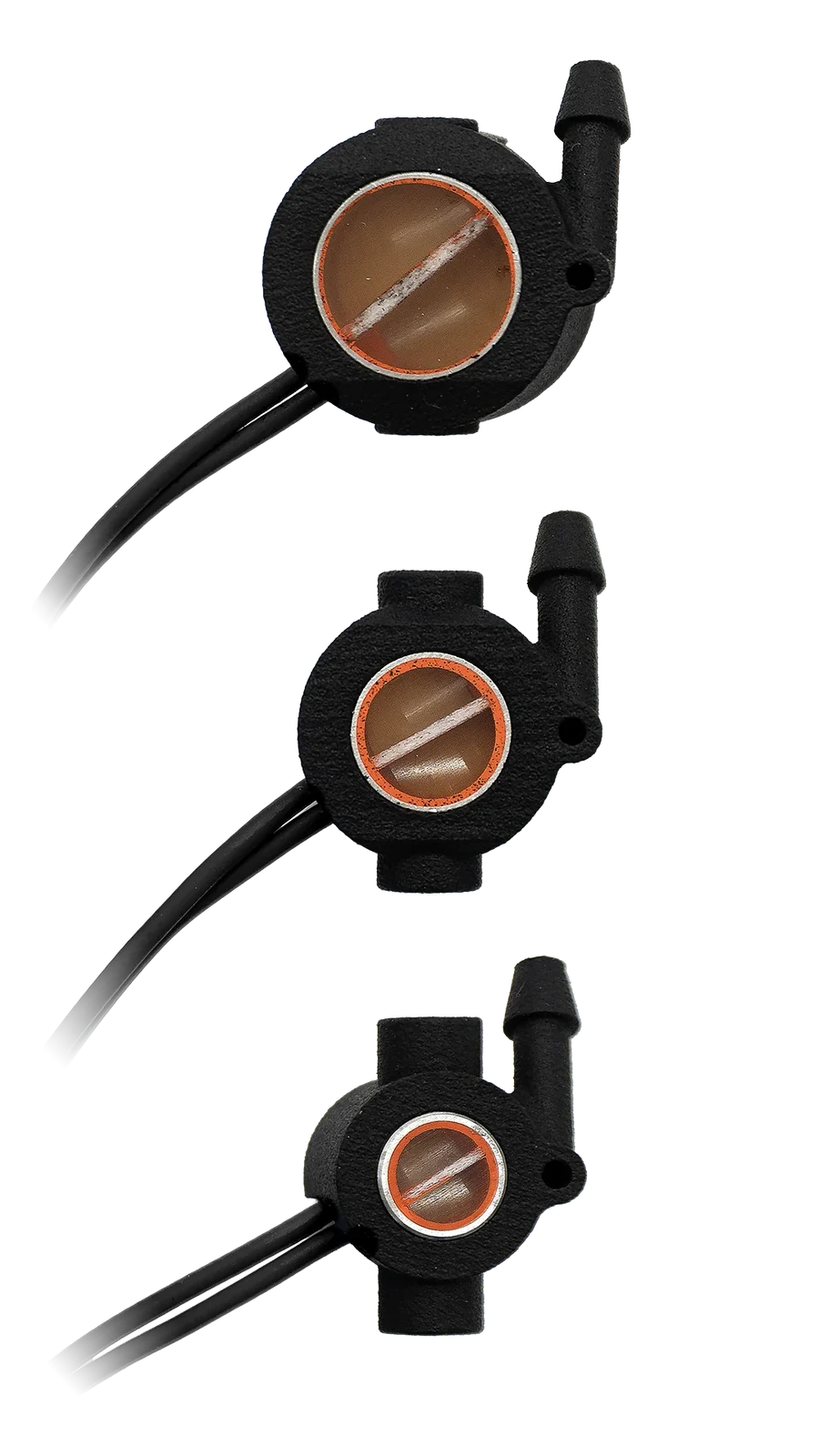
The Thornetix Talisman high-speed, multi-channel embedded ultrasound module ships with three dual-crystal probes included: 2.25 MHz for thick, coarse or rough surfaces, 5 MHz general-purpose, and 7.5 MHz for thin material. An optional three-probe single-crystal pack is available, and single, twin, delay-line and high-temperature designs are supported.
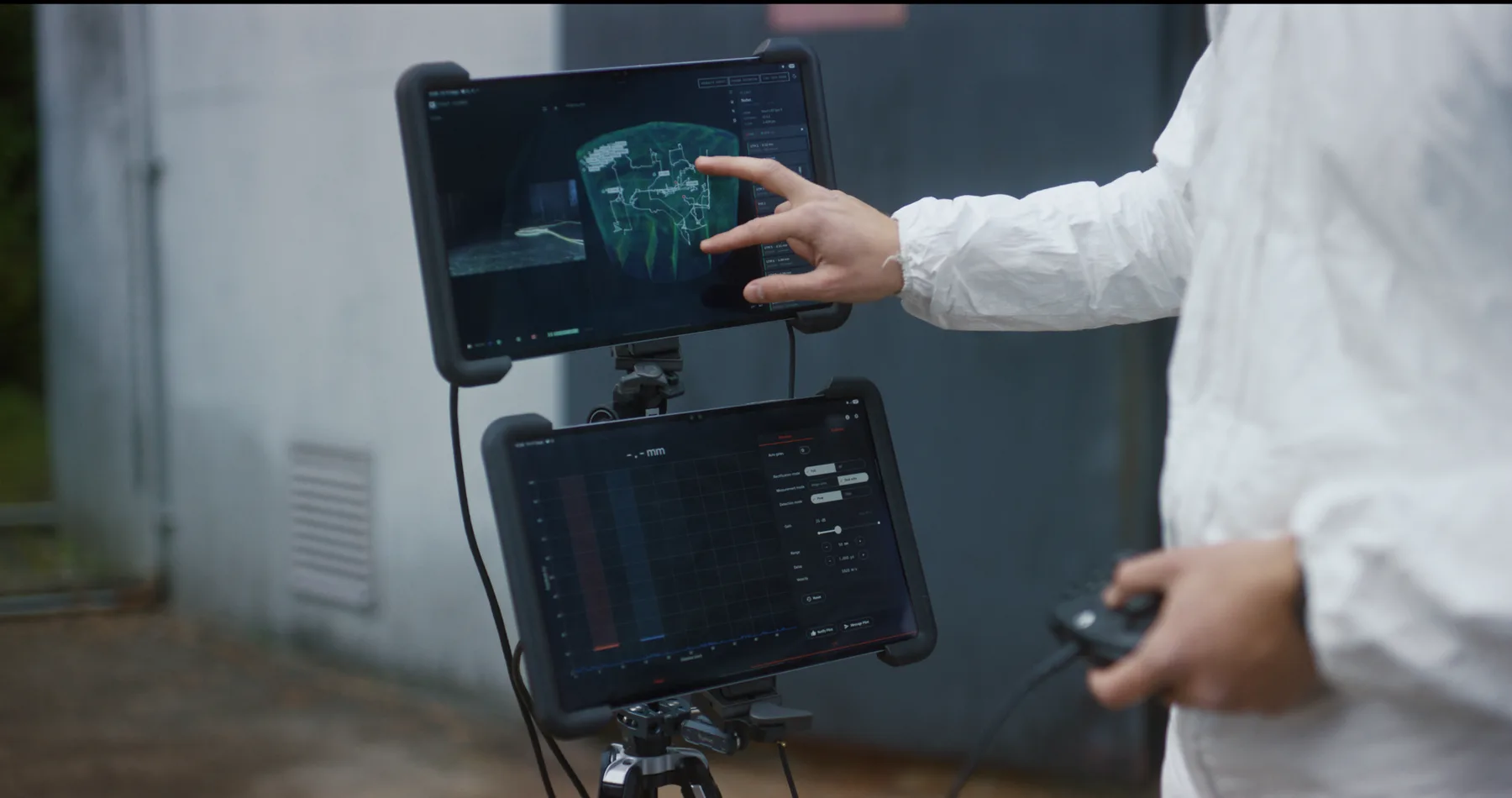
Full in-flight control through Scout Companion: gain and gates, all tunable while the payload stays on the wall; no landing to change a setting.

Continuous tethered power turns every flight into a deliberate, verifiable session — no battery swaps, no racing the clock.
Tethered power means no battery clock. With anti-collision sensors switched off for surface contact, you focus on careful, safe manoeuvring — and keep working until the couplant reservoir needs refilling, not until a battery dies.
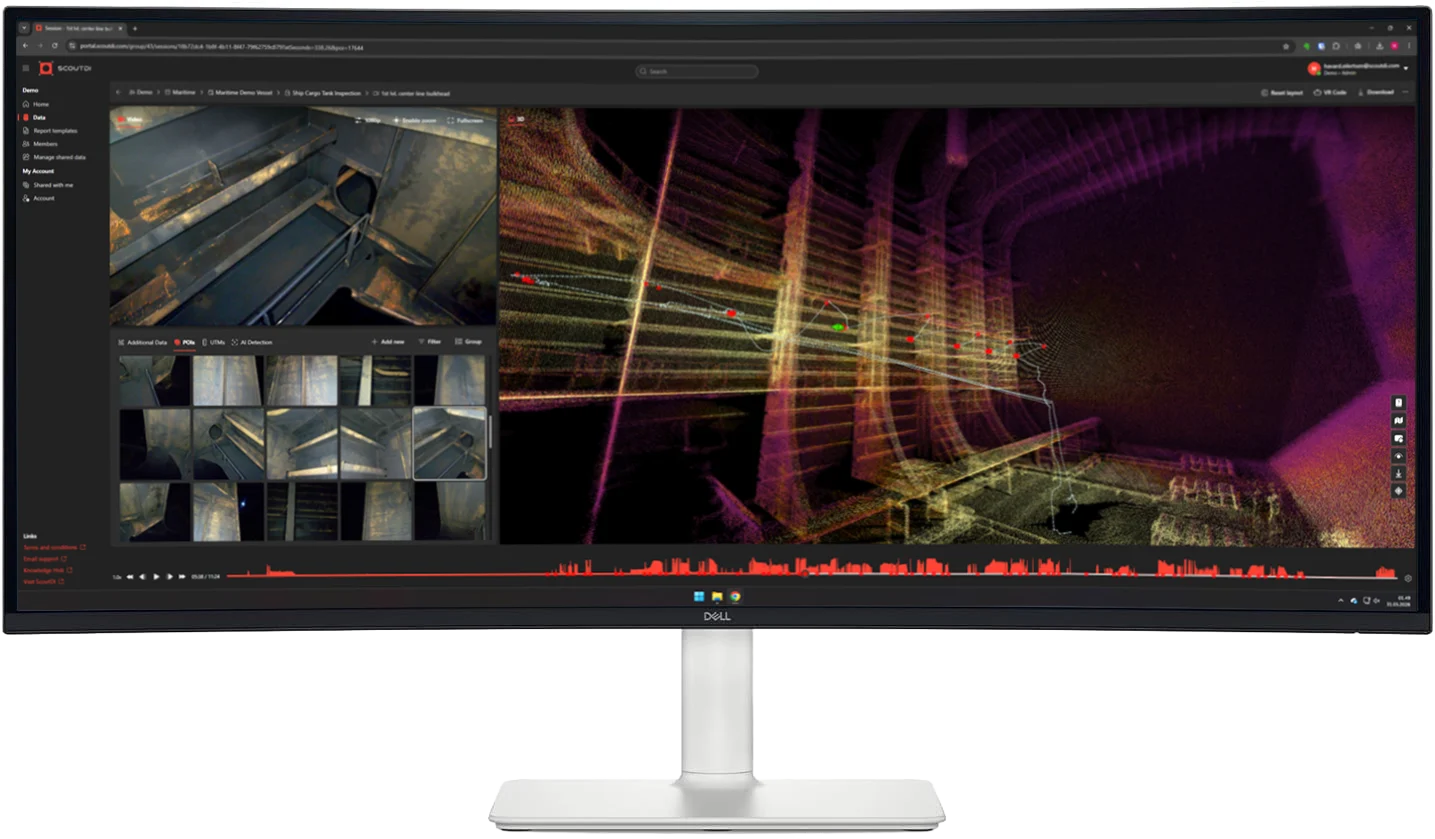
Every flight is a live verification session: the 4K preview, the live A-scan in Scout Companion and continuous flight-path rendering confirm data quality and coverage while you’re still on site. Catch a weak signal or a missed area before you leave — and avoid a costly second mobilisation.
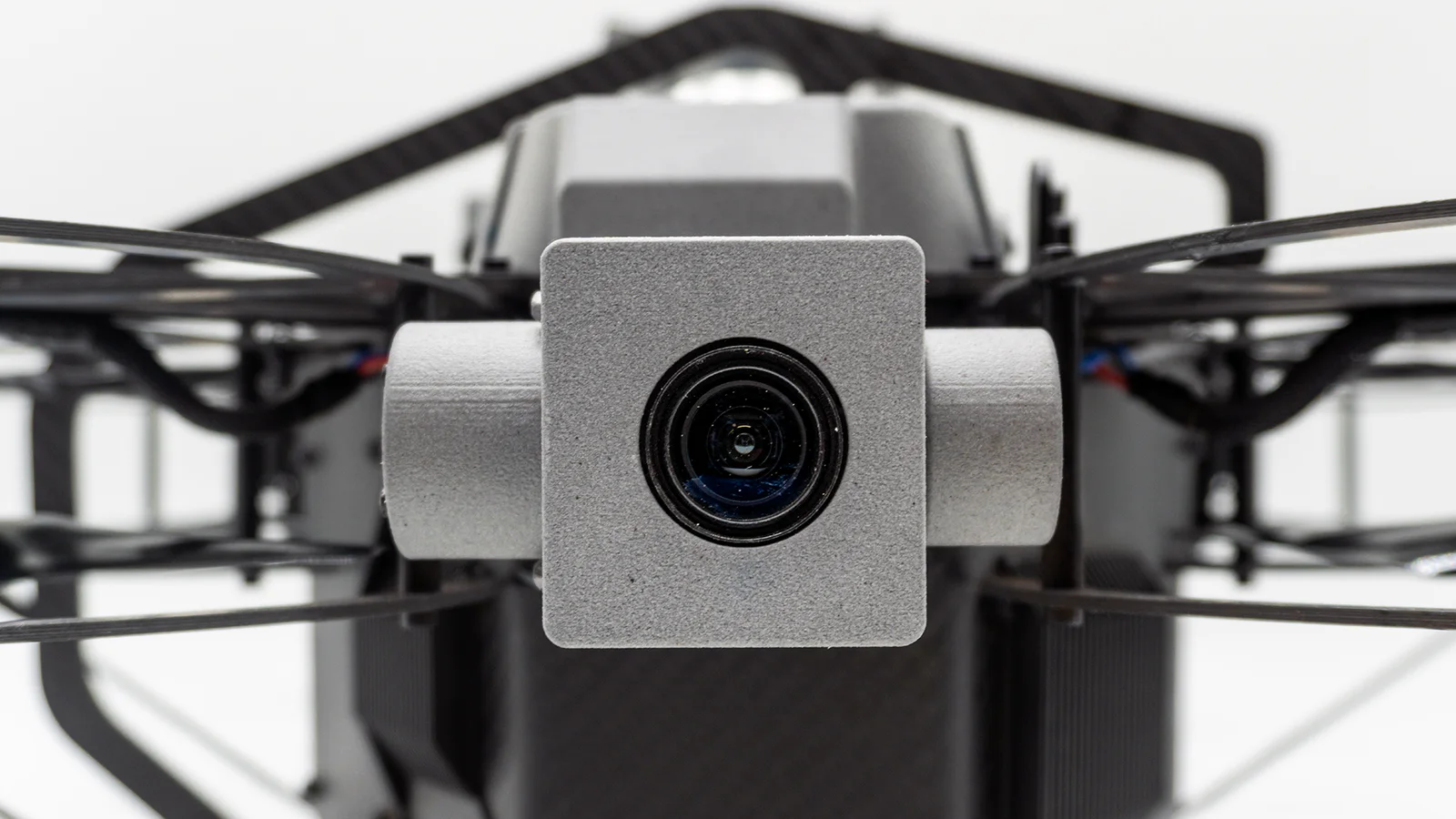
The integrated 3.5× optical zoom lets the pilot study corrosion, coatings and surface condition from a safe stand-off, and review 4K photos, before committing to a docking attempt.

Pilot flies Scout 137 to the target via Scout Operator; laser sight marks the landing spot. The arm flexes −20° to +90°, reaching vertical walls, overhead bulkheads, and angled stiffeners. NDT technician follows on Scout Companion’s 4K view, toggles to the UT view at contact. Same coordinates every revisit.
Pilot triggers the brush. Variable-speed motor cleans with the right head; couplant gel deploys at the probe tip. Pilot controls clean time, from light dust through rust grade C. Up to 100 dispenses per flight.
Probe auto-contacts the surface once gel is deployed. Contact sensor confirms, drone trims hover, live A-scan trace appears in Scout Companion. Auto-gates and auto-gain lock the signal; Multi-Echo reads through coatings up to 6 mm. NDT technician tunes gain, gate, and delay mid-flight if needed. Need to dodge a rust patch or inclusion? Wiggle the probe up to 5 mm — without releasing the magnets.
Each reading is logged in the flight dataset with its timestamp and position on the LiDAR map. Upload the flight to Scout Portal, then generate class-ready reports.

Specifications
UT module: Thornetix Talisman
Probe types supported: Single - twin - delay-line - high-temperature
Standard probe: 5.0 MHz dual-crystal (general purpose)
Extra probes: 2.25 MHz dual-crystal (thick / rough) 7.5 MHz dual-crystal (thin / small)
Surface preparation: Built-in spot-prep tool ScoutBrush SiC / ScoutBrush Metal / ScoutSleeve abrasive sleeves (light → heavy)
Qualified rust grade: ISO 8501 — rust grade C
Couplant: Water-soluble gel (e.g. Chemetall UCA-2M)
Couplant capacity: 33 ml reservoir 50–100 dockings between refills
Thickness range: 1 – 150 mm (material-dependent)
Measurement angles: −20° to +90°
Measurement modes: Peak Edge Multi-Echo coating exclusion (Modes 1, 2, 3 per ISO 16809)
Coating tolerance (Multi-Echo): Up to 6 mm — reads through coatings without surface removal
Accuracy: < 0.1 mm or ±1 %
Resolution: 0.001 mm
Measurement gates: 2, manual or automatic
Fine adjustment: Wiggle — probe shifts up to 5 mm without releasing the magnets
Calibration standard: Factory tested & calibrated to ISO 16831 / EN 15317
Field calibration: 1- and 2-point via the app
Aiming: Laser-aided probe visible through the main 4K camera
Live confirmation: Operator sees the reading during flight
Repeat measurements: Supported logged with location tag
Gain: Up to 80 dB
Digitiser: 80 MHz sampling rate
A-scan sampling: 30 Hz full waveforms logged for review
A-scan resolution: 8-bit
Sampling rate: Up to 100 MHz
Compatibility: Scout 137 Gen 3 standard payload bay
Payload weight: 435 g (detachable arm)
Probe attachment: Magnetic
Release mechanism: One-click Smart Release