NevadaNano MPS 14 flammable gases 15-year sensor.
Continuous flammable-gas detection on every Scout 137 flight — built in, factory-calibrated, logged with position and time. If the atmosphere changes, the inspector knows within 20 seconds. Complements your entry-clearance procedure; doesn’t replace it.
NevadaNano MPS sensor
The NevadaNano MPS detects, quantifies and classifies 14 flammable gases — methane, propane, hydrogen, butane and 10 more — at %LEL accuracy across the full 0–100 %LEL range, via NevadaNano’s TrueLEL™ multi-gas algorithm.
Unlike catalytic-bead sensors, the MPS is immune to poisoning and saturation, and is factory-calibrated for 15+ years — no field calibration, ever.
In practice: one device covers methane in an offshore separator, butane in an LPG vessel, and hydrogen in a refinery sample line. Without swapping anything.
Logged with position & time
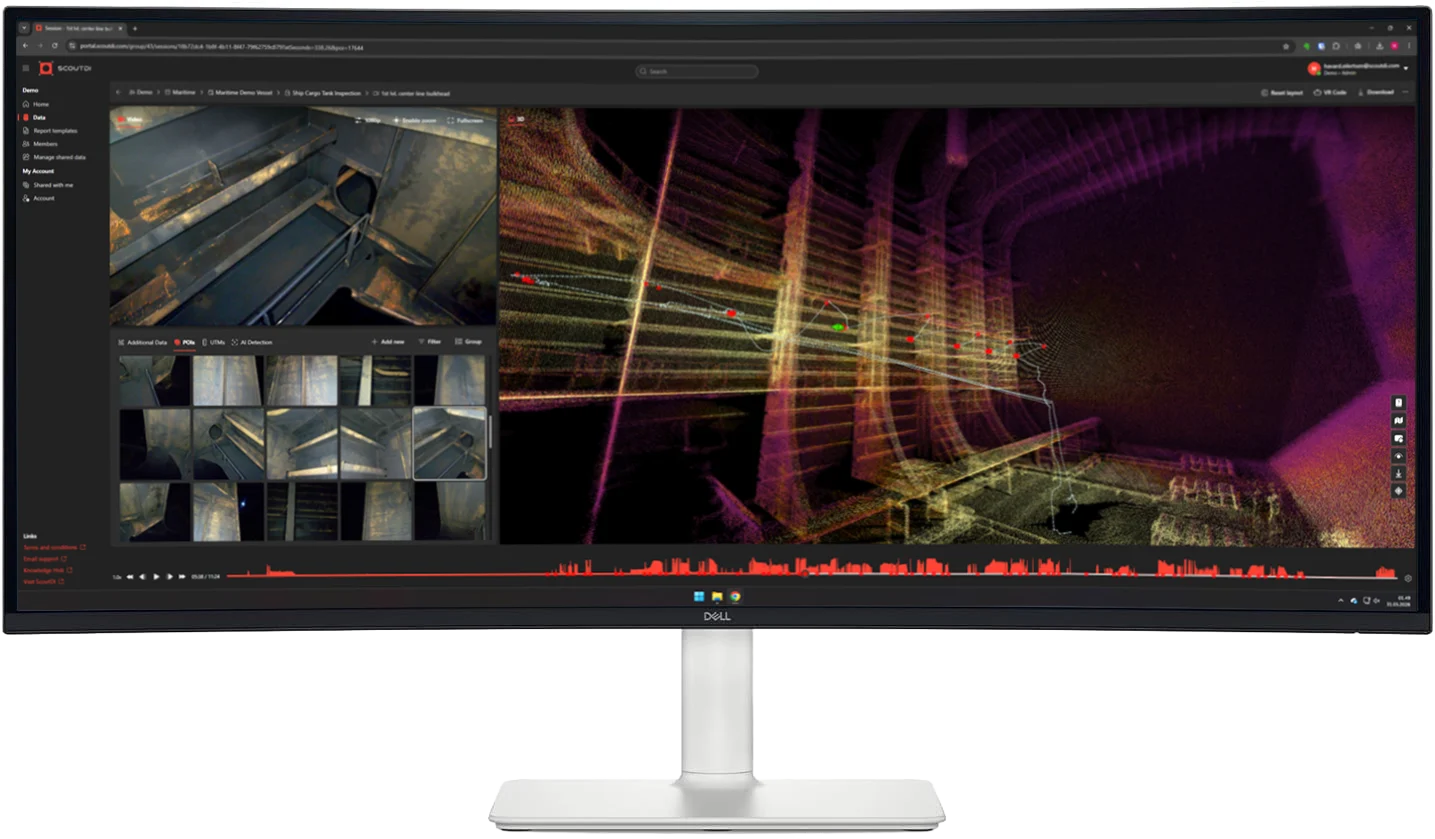
Every gas reading is saved with its position and timestamp, captured against the LiDAR’s 3D map of the asset. The full spatial record of where each %LEL value was measured lives in the flight dataset.
Today that location data isn’t surfaced on a map in Scout Operator, Companion or Scout Portal — but because it’s captured, the spatial record is there in the dataset for later analysis or export.
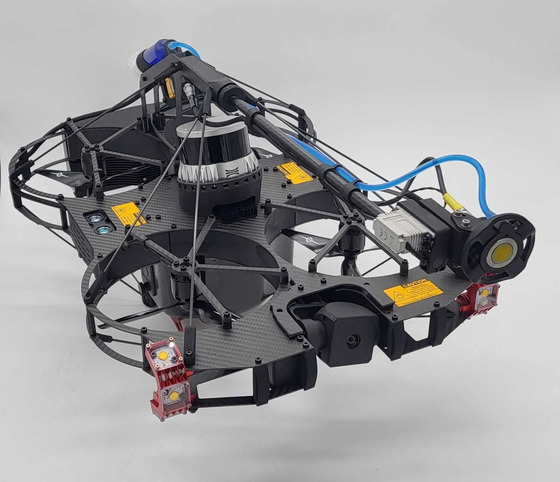
The whole frame is electrically continuous and tied to the tether, so no isolated charge can build up to a spark. Light, stiff, and grounded by design.
The tether delivers power, grounds the chassis, and carries live data up to Scout Operator. Battery-free and zero-RF by design — third-party propane-chamber tested with no ignition.
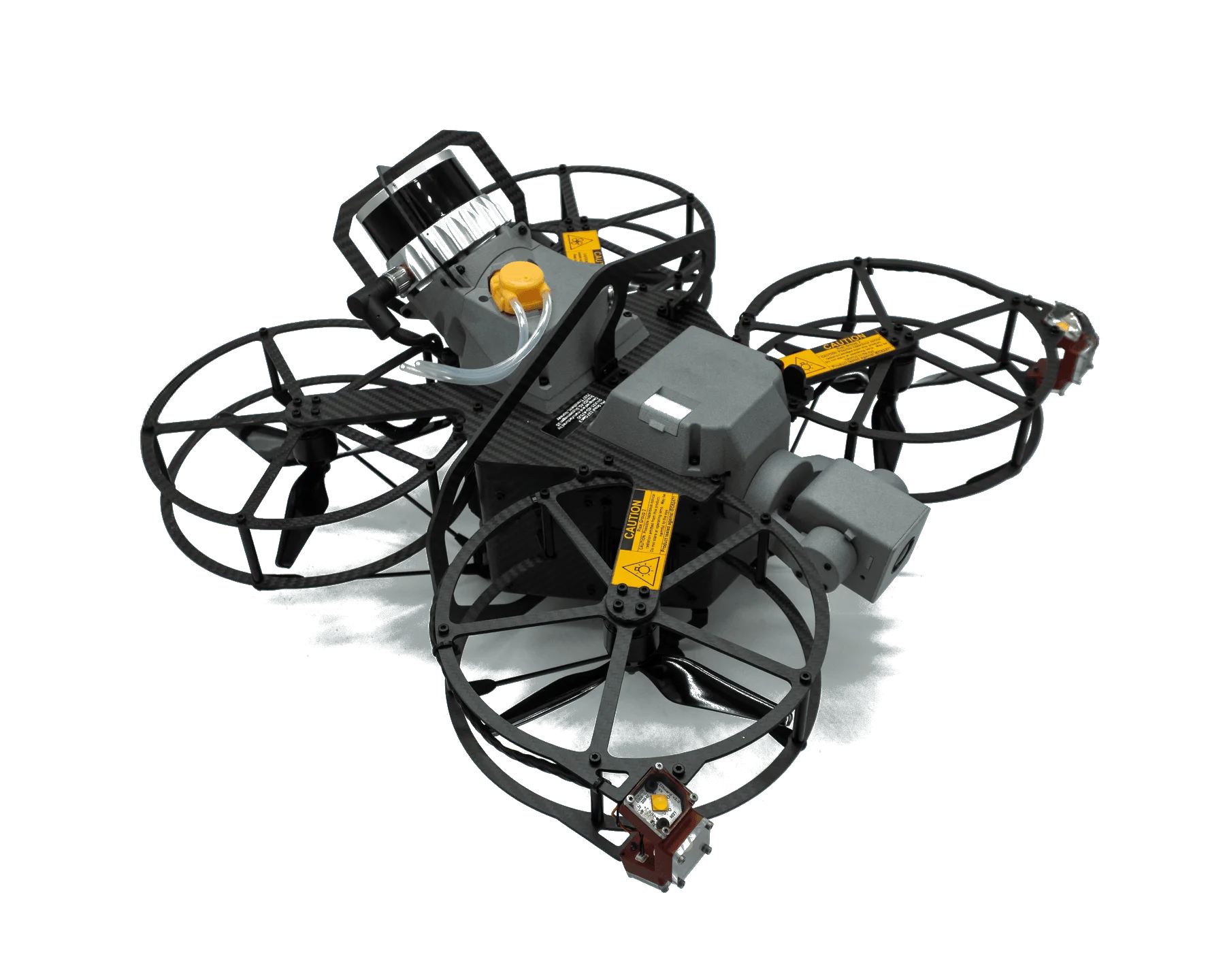
The sensor lives in the smartbox underside — gas reaches it through a grille and foam vent. Nothing to mount, nothing to swap. Safety should be baseline, not an upgrade.
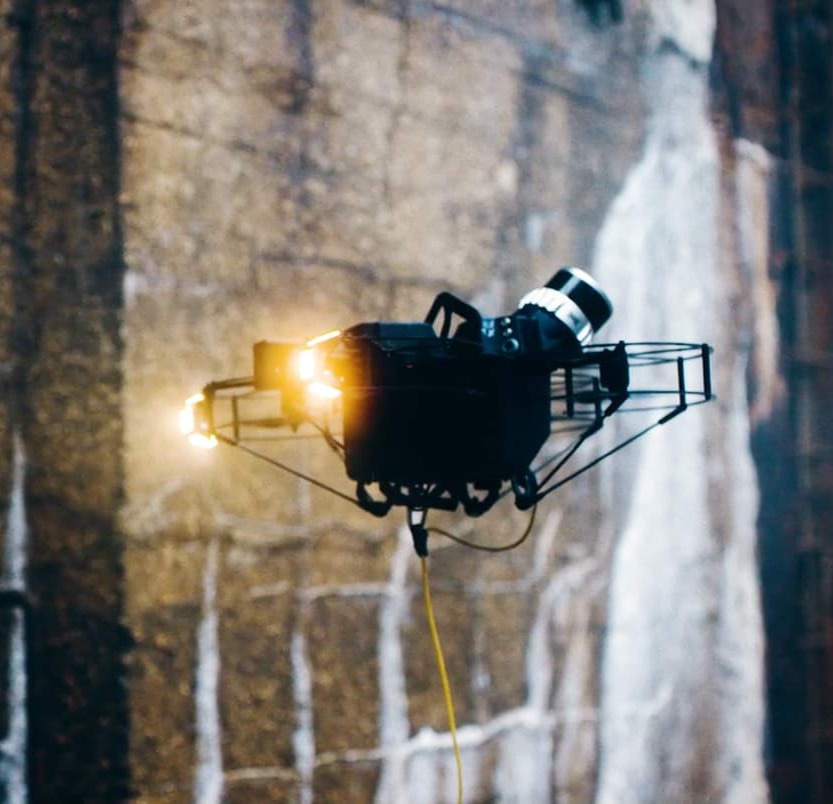
ATEX is built for fixed equipment in a defined enclosure. Mobile inspection drones don’t fit. ATEX approval is hard to get for a flying platform — but that doesn’t mean we haven’t done everything we can to make Scout 137 as safe as possible when we designed it. It’s built for verifiable ignition safety from the ground up:
The sensor itself is intrinsically-safe certified under ATEX, IECEx, UL, FM and CSA (S4 format), with EN 50271 and IEC 60079-29-1 compliance. Combined with your operational procedure, this lets Scout 137 work safely in places people shouldn’t be.
Sensor activates automatically with the drone. 1–2 minute initialisation; status appears in the Scout Operator panel.
Fly your inspection as usual. The sensor reads the atmosphere continuously in the background of every other capture — no extra interaction required.
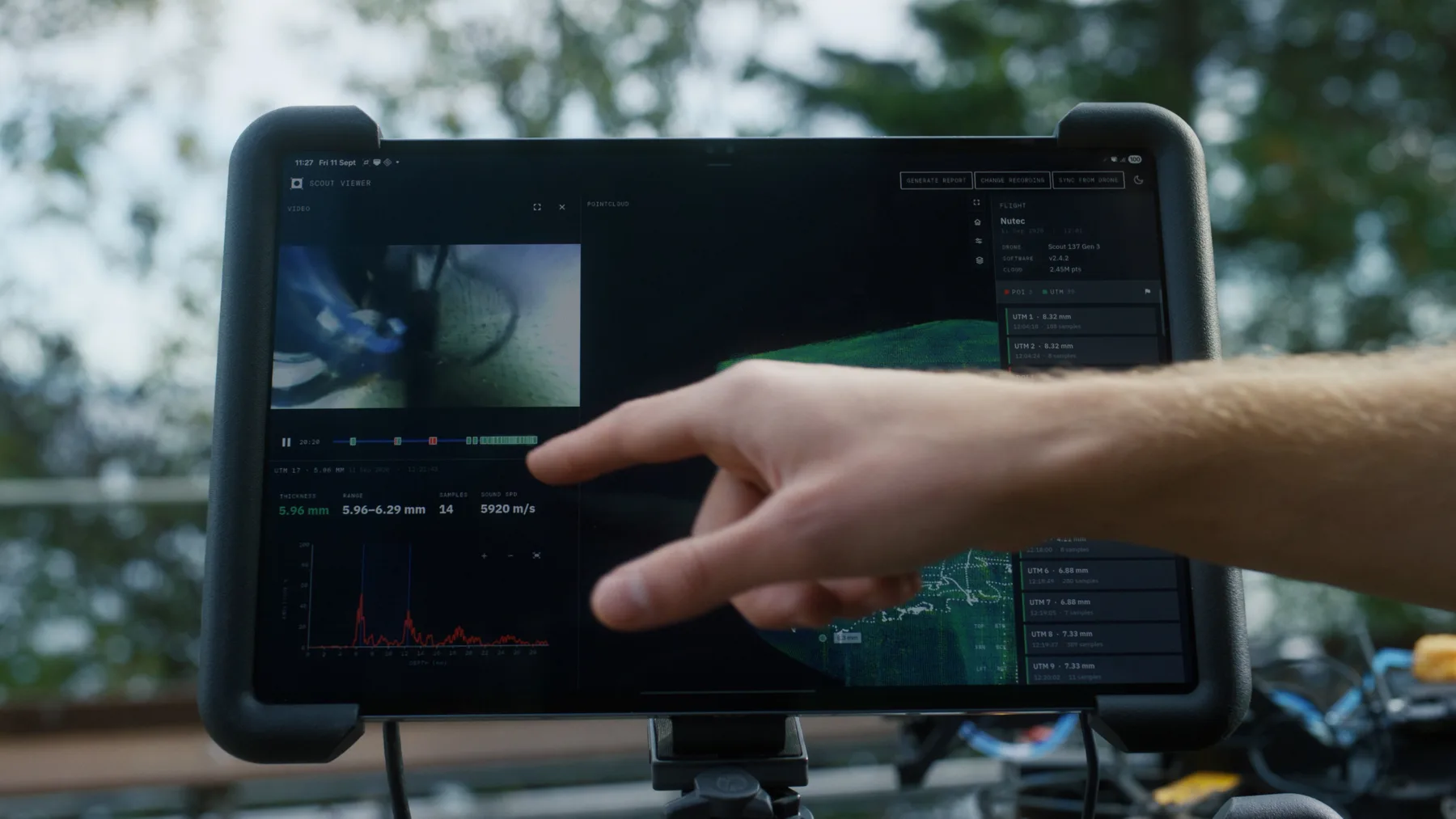
Live %LEL and ambient temperature stream to the Scout Operator panel. When the atmosphere changes, your inspector sees it within 20 seconds — not the next morning, reviewing the flight. Warnings fire automatically at 20 and 40 %LEL.
Every reading saved with the flight data — %LEL, ambient temperature, position and timestamp. The spatial record sits in the dataset (not yet shown on a map in Operator, Companion or Portal).

Specifications
Model: NevadaNano MPS Flammable Gas Sensor (MPSF02-S42505-E0)
Detection range: 0–100 %LEL (across all listed gases)
Resolution: 0.1 %LEL
Response time (T90): < 20 seconds
Accuracy (0–50 %LEL): ±3 %LEL methane ±5 %LEL butane, ethane, hydrogen, isobutane, isobutylene, methyl ethyl ketone, pentane, propylene ±6 %LEL propane ±10 %LEL isopropanol ±12 %LEL octane, toluene, xylene
Gas classification: TrueLEL™ multi-gas (NevadaNano)
Operating temperature: −20 °C to +50 °C
Humidity: 0 to 100 %RH
Pressure: 80 to 120 kPa
Calibration: Factory calibrated — no field calibration required
Sensor life: 15+ years
Self-test: Power-On-Self-Test (POST) + Built-In-Self-Test (BIST)
Mount: Built into the Scout 137 smartbox (underside); gas reaches the sensor through a grille and foam vent. Not a swappable payload.
Warnings: First at 20 %LEL second at 40 %LEL
Activation: Automatic on drone power-on (1–2 min initialisation)
Calibration: Factory calibrated — no field calibration required
Sensor life: 15+ years
Self-test: Power-On-Self-Test (POST) + Built-In-Self-Test (BIST)
RF emissions: None — no transmitters, receivers, Wi-Fi, Bluetooth, cellular or GPS
Power: Battery-free — tethered
Chassis: Grounded through the tether
Validation: Third-party propane-chamber tested — > 1 hour with no ignition.
Intrinsic safety: ATEX Zone 0 IECEx UL FM CSA (S4 format)
Functional safety: EN 50271
Performance: IEC 60079-29-1