Scout 137 Gen 3

One drone. Every confined space.

Tethered. Unlimited. Built for contact.
For assets that block GPS, swallow light, and punish contact. One platform, four payloads, one tablet.
Min. opening | 600 mm
Flight time | Unlimited
Payload bays | Hot-swap
Localisation | GPS-free SLAM
Lighting | 12 000 lm
Min. opening | 600 mm
Flight time | Unlimited
Payload bays | Hot-swap
Localisation | GPS-free SLAM
Tethered architecture

Unlimited flight time. No stress.

One 60-metre tether carries power and data — never radio. No battery in the drone, none in the ground station.

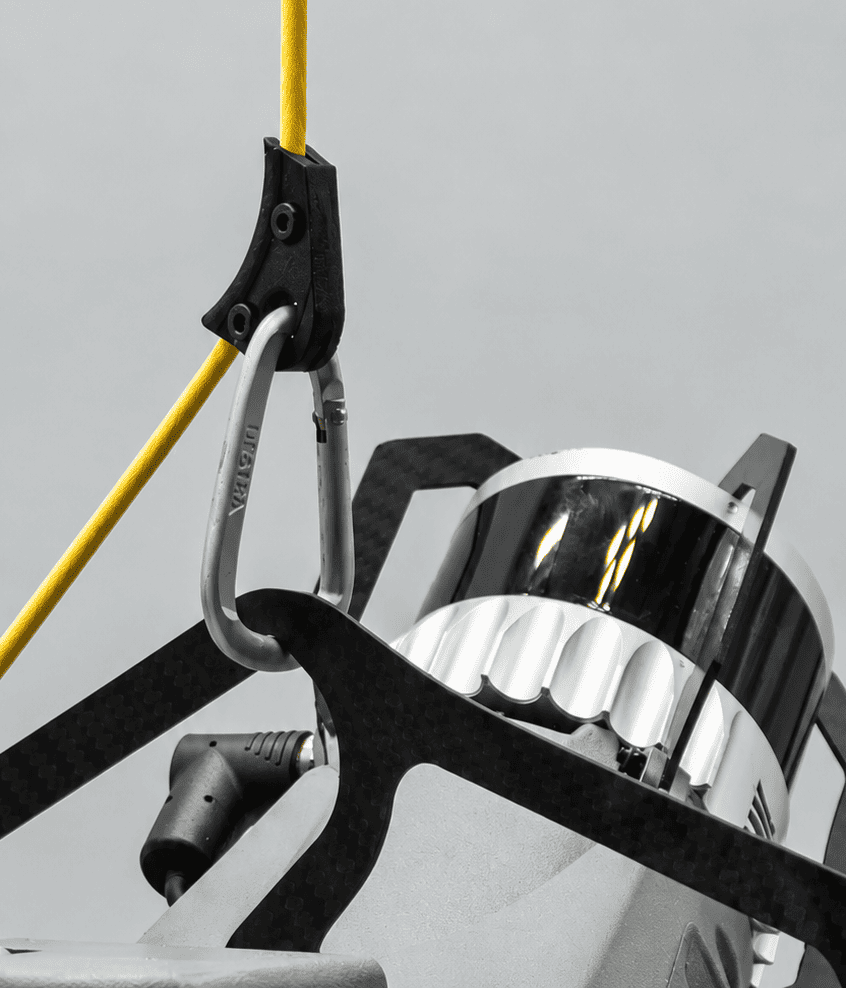
TDS. The Tether Deployment System deploys and recovers the drone on the tether itself: a controlled launch and retrieval every flight.
No RF, anywhere. No transmitters, no GPS receiver — nothing to intercept, jam or spoof.
No fire hazard. No lithium-ion enters the asset, and nothing to strand the drone mid-flight.
Grounds static. 1+ hour propane-chamber test — no ignition.
No stress
Operator-first cockpit
Modular payload bays
Autonomy
Virtual cage
Operator-first cockpit
Modular payload bays
Autonomy
Virtual cage
Why it works

A platform designed for the assets others can’t reach.

Five design choices change what’s possible inside a confined industrial space.
Easy and safe to operate.

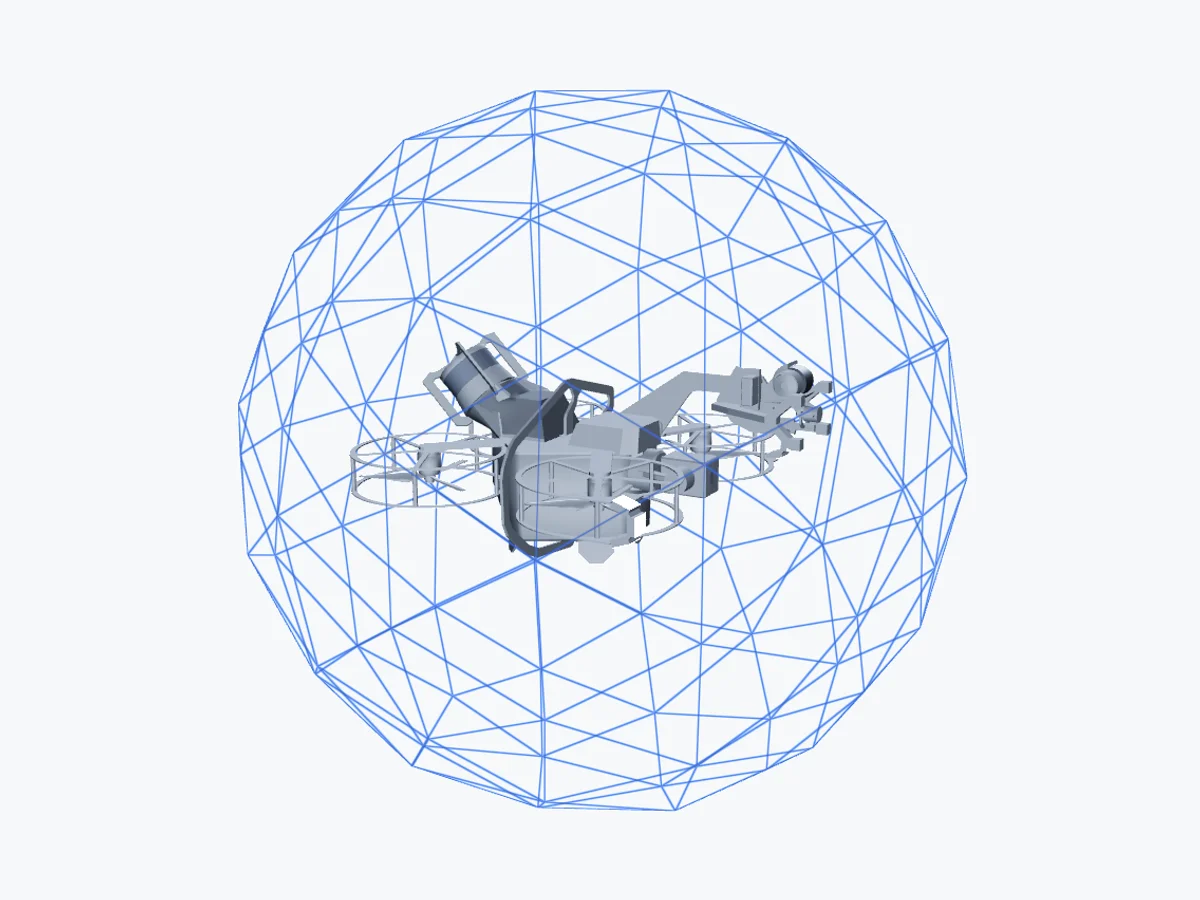
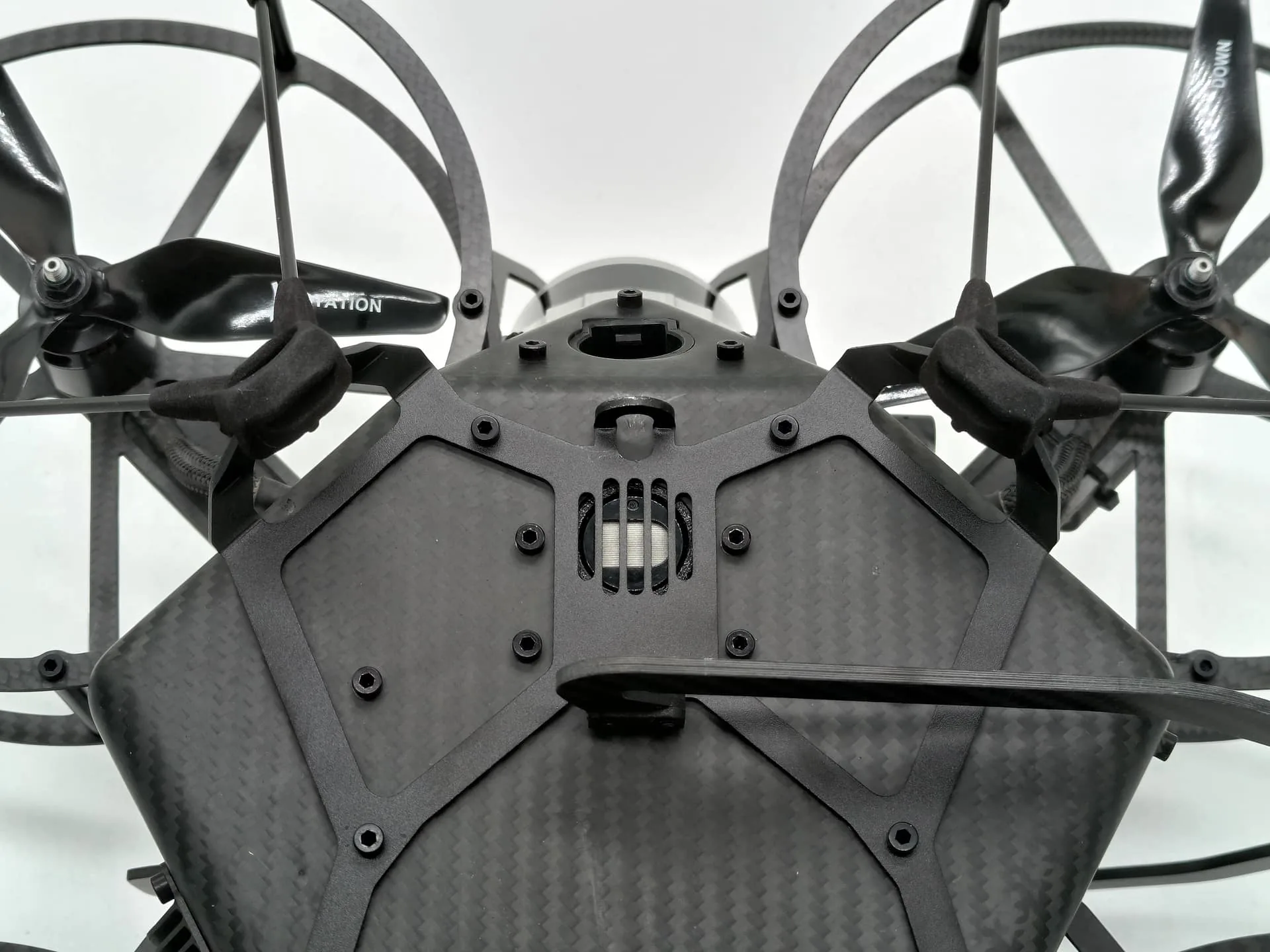
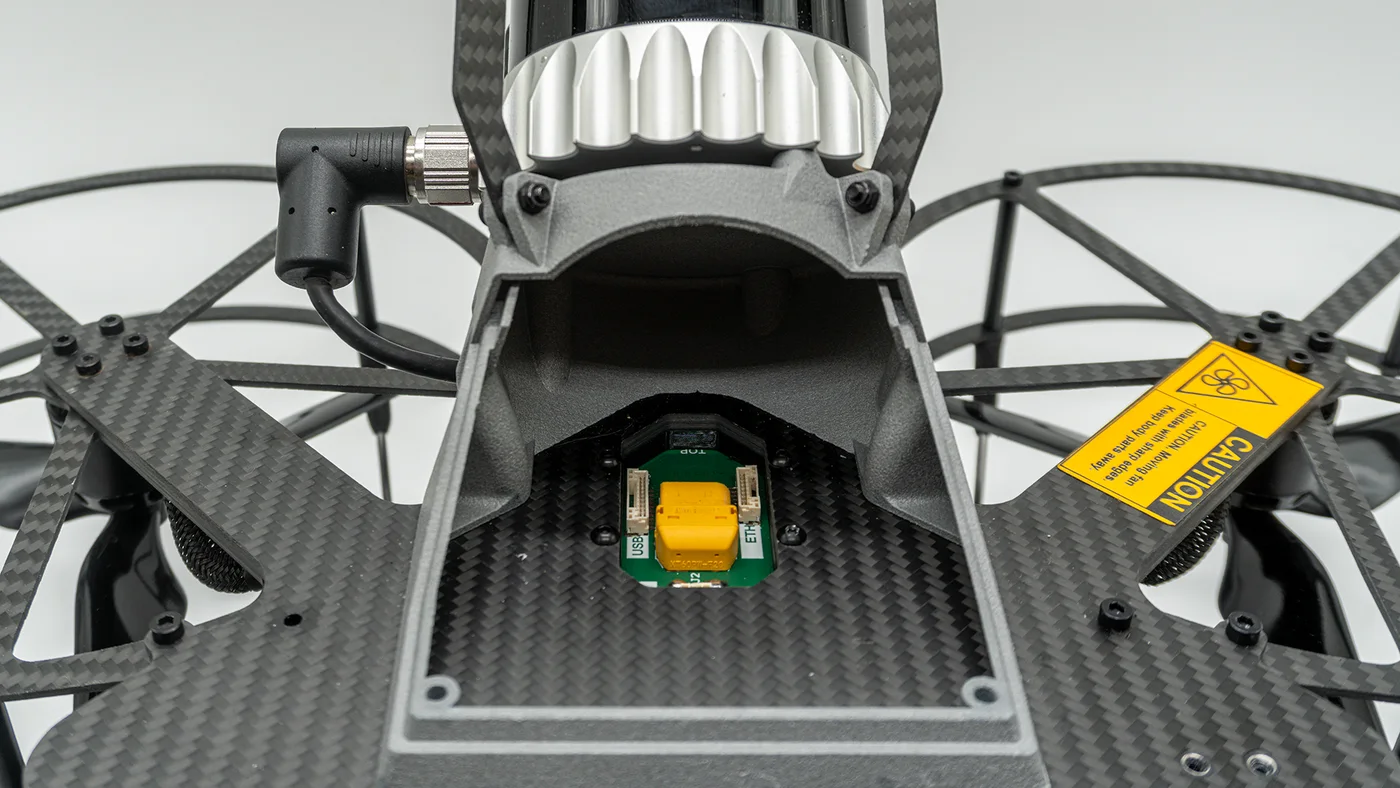
Contact without incident. A LiDAR virtual cage actively stops the drone before it touches; physical-cage drones just bounce off a bulky shell. You fly into smaller openings and closer to structure with no expert stick skills; the cage stays live in the dark, or off when you need contact. And it keeps working beyond line of sight, so the drone is just as protected deep inside the asset as it is at the hatch. You set the cage size to fit the job — tighten the boundary for tight clearances, or widen it for more margin. And the drone itself is a robust, lightweight carbon-fibre build — made to take contact, and compact enough to maximise access into the tightest assets.

Does the job itself.

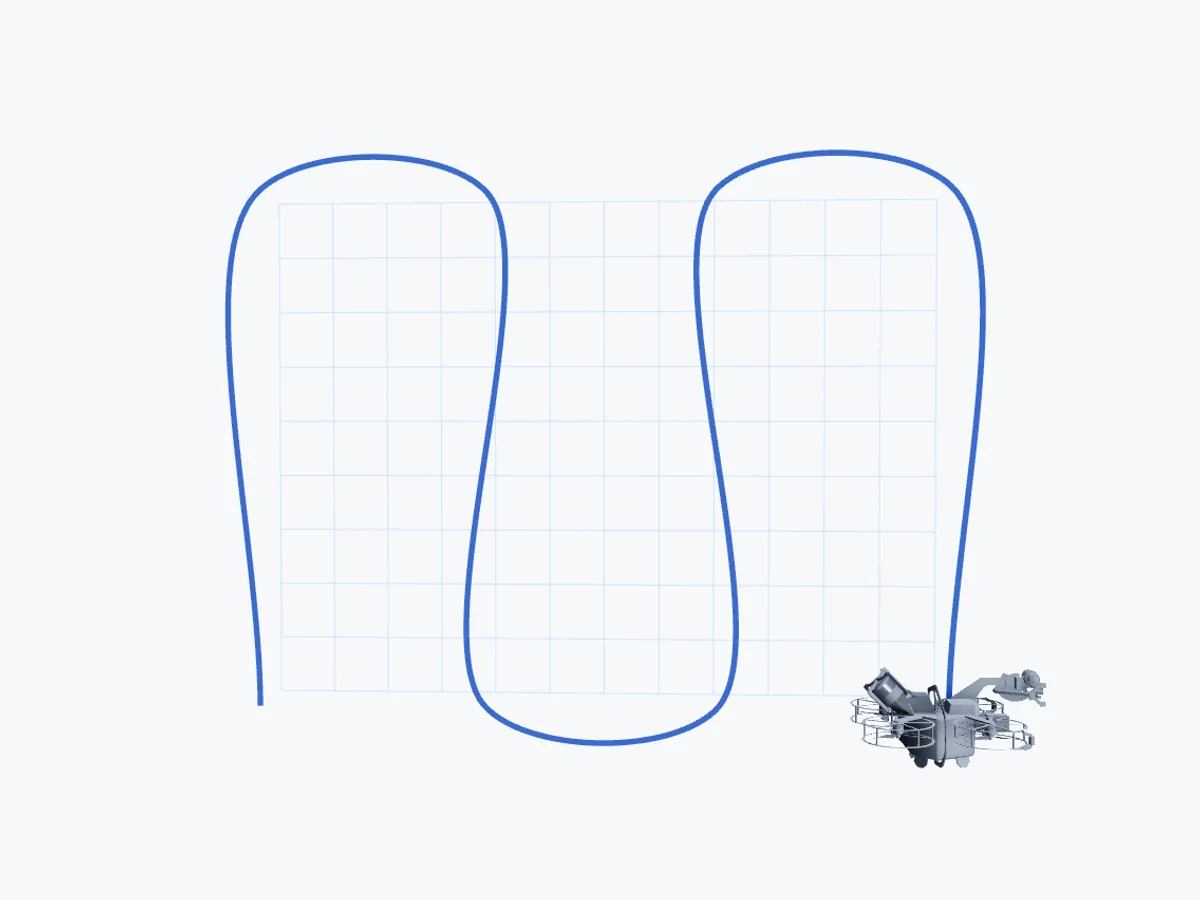
Auto Surface Scan, Auto Line Scan and Distance Lock fly the repetitive geometry on their own — the same coverage every flight, captured hands-free. The consistent, overlapping passes are ideal for photogrammetry. The pilot supervises; the drone executes. It always knows exactly where it is — indoors and GPS-free — on 128-beam LiDAR and SLAM, tagging every frame to its position in the asset.

One platform. Four missions.

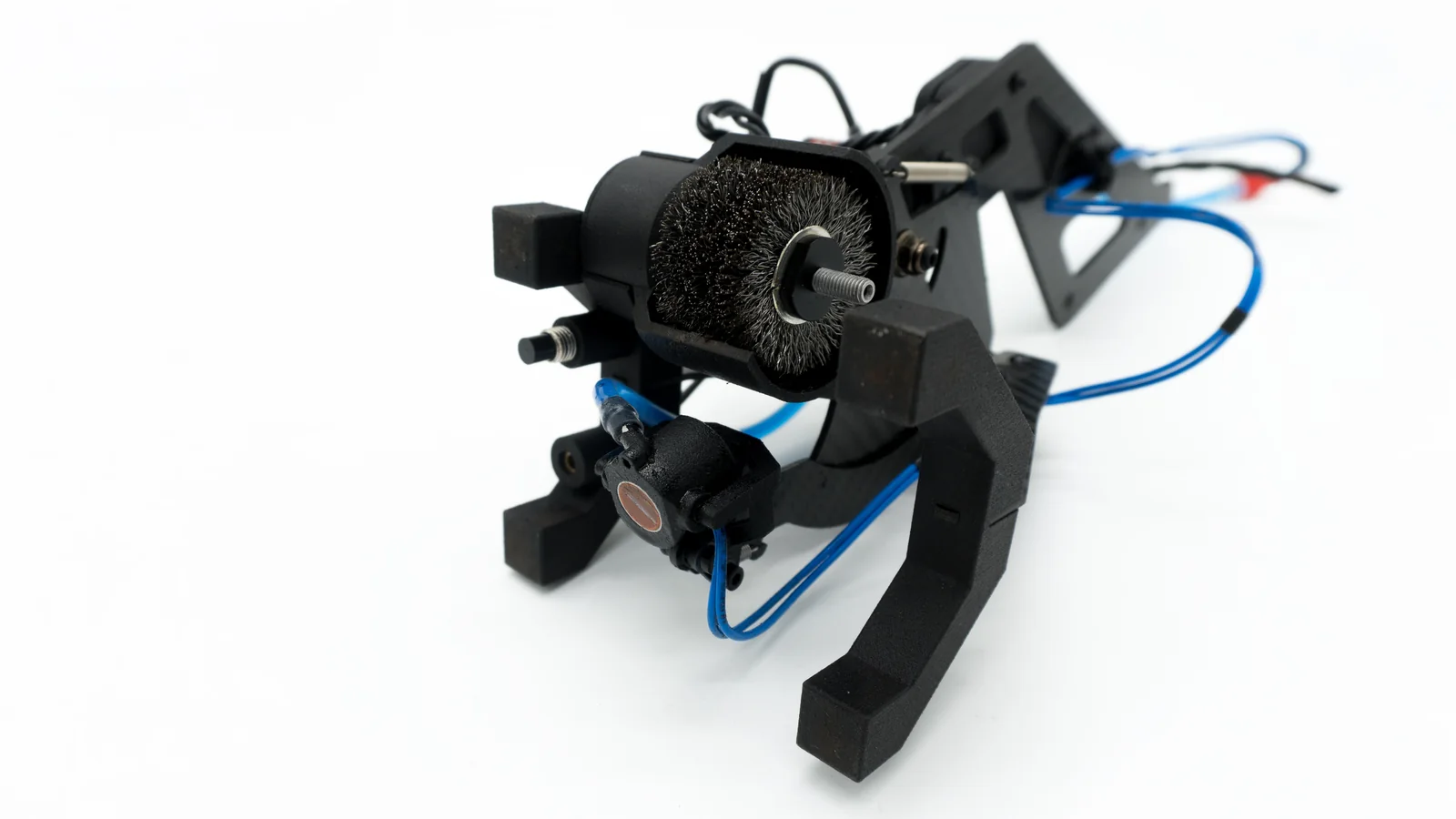
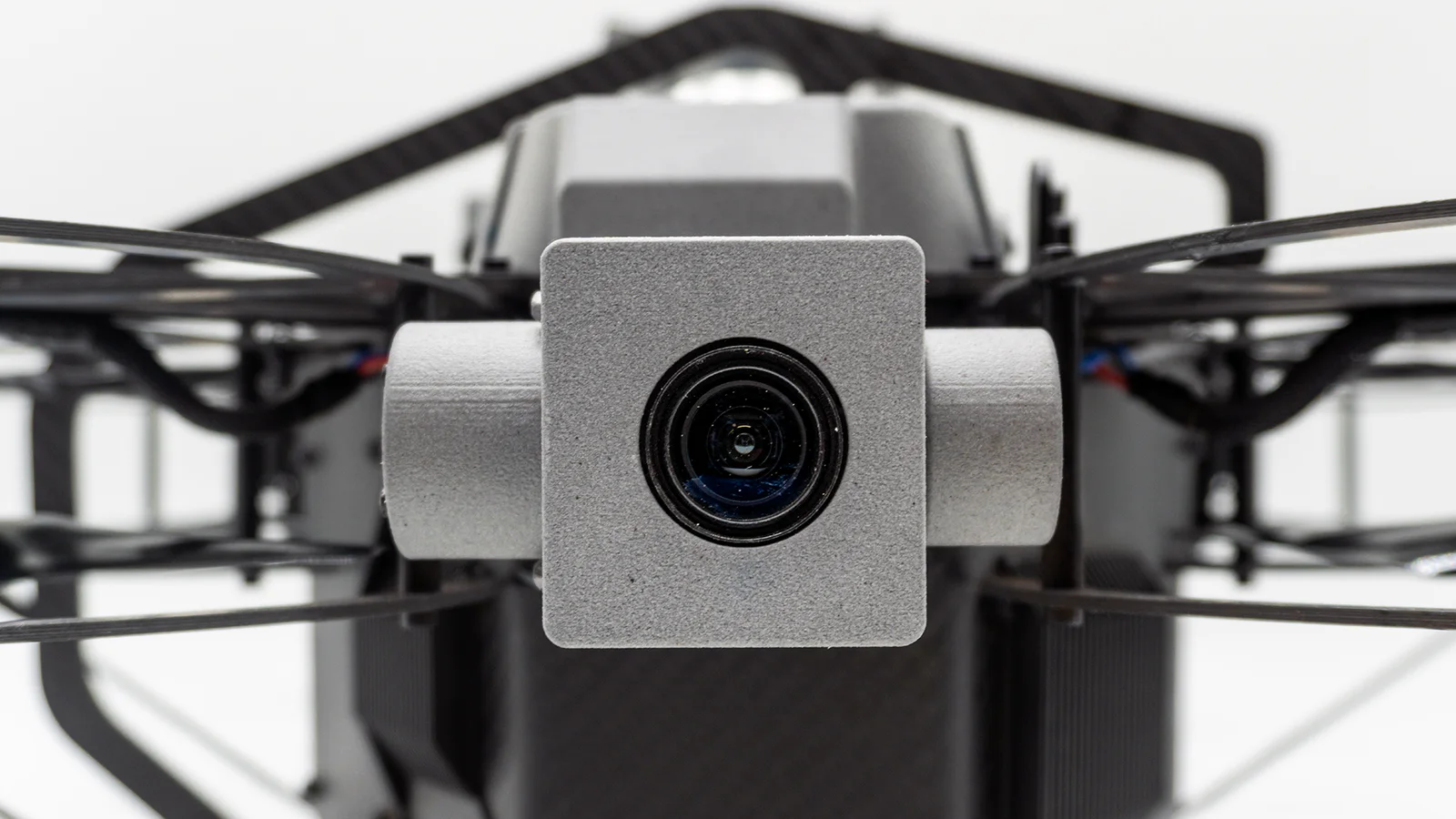
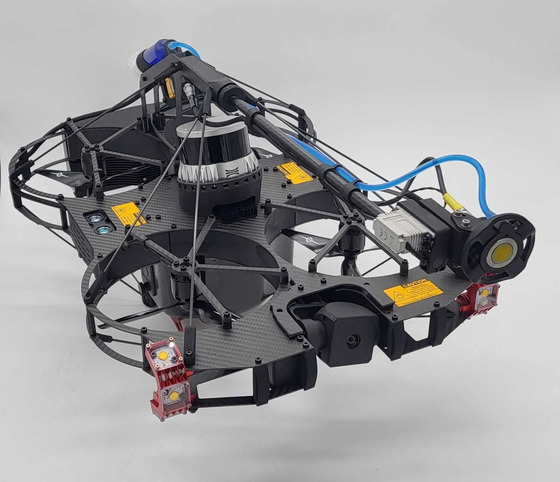
Four payloads, multiple bays: 4K Zoom Camera, LiDAR and gas sensor standard, UT optional. An onboard NVIDIA Jetson Orin NX processes perception and SLAM in real time, with headroom for the payloads still to come. Future-proof by design: the platform you buy today keeps gaining capability as new payloads ship — continuous value from the same drone, not a fixed spec sheet

Built around the operator.

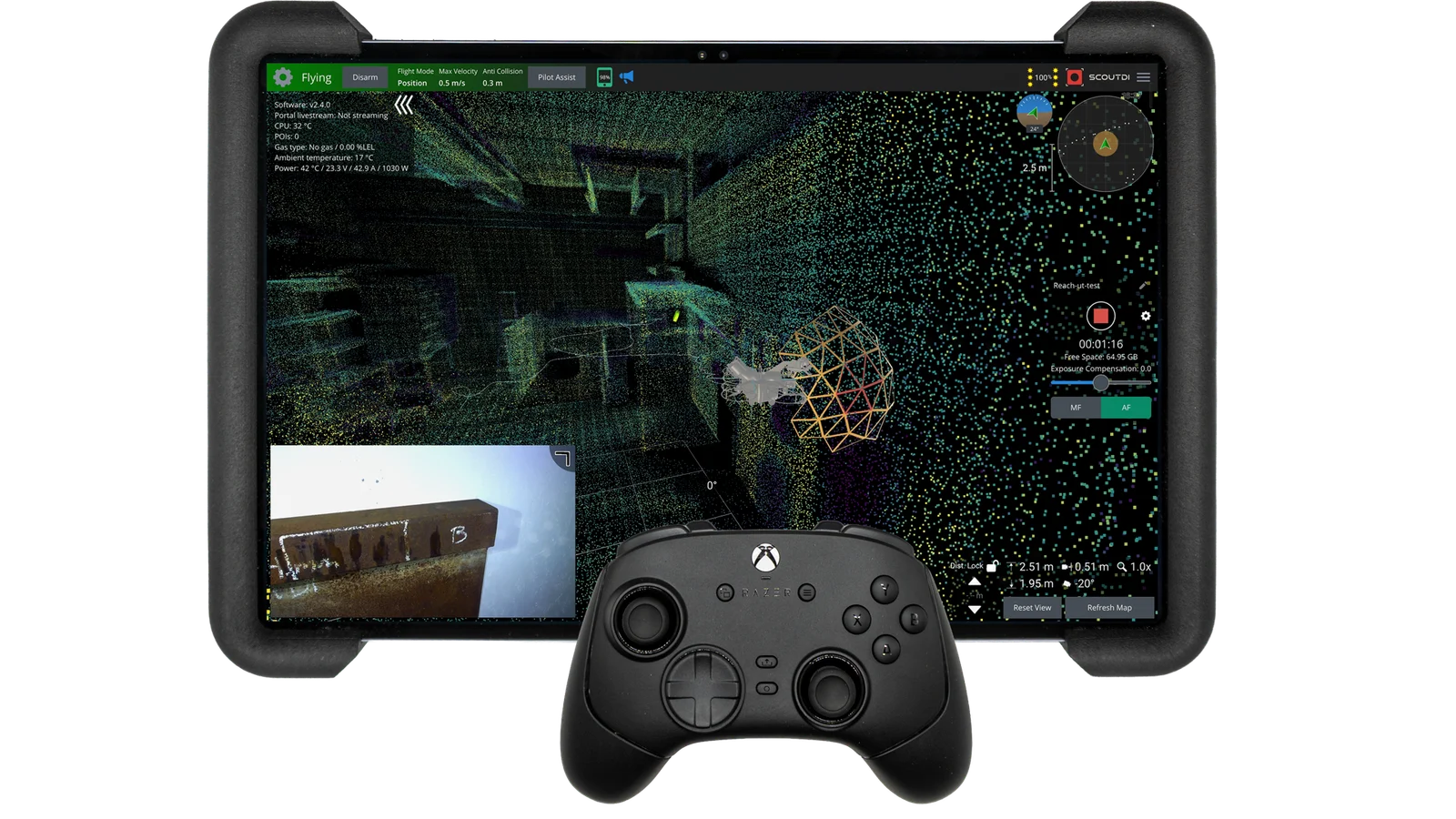
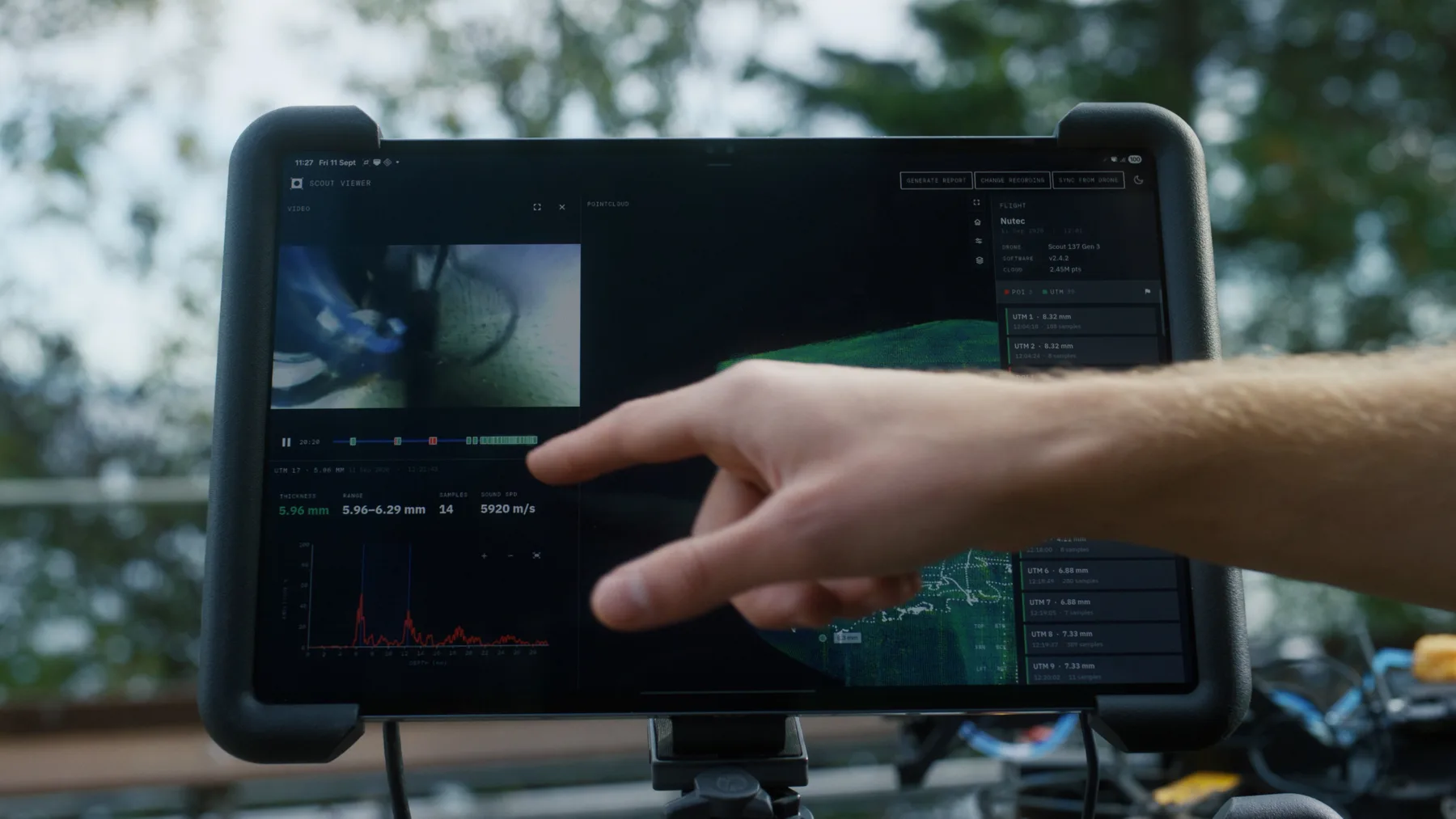
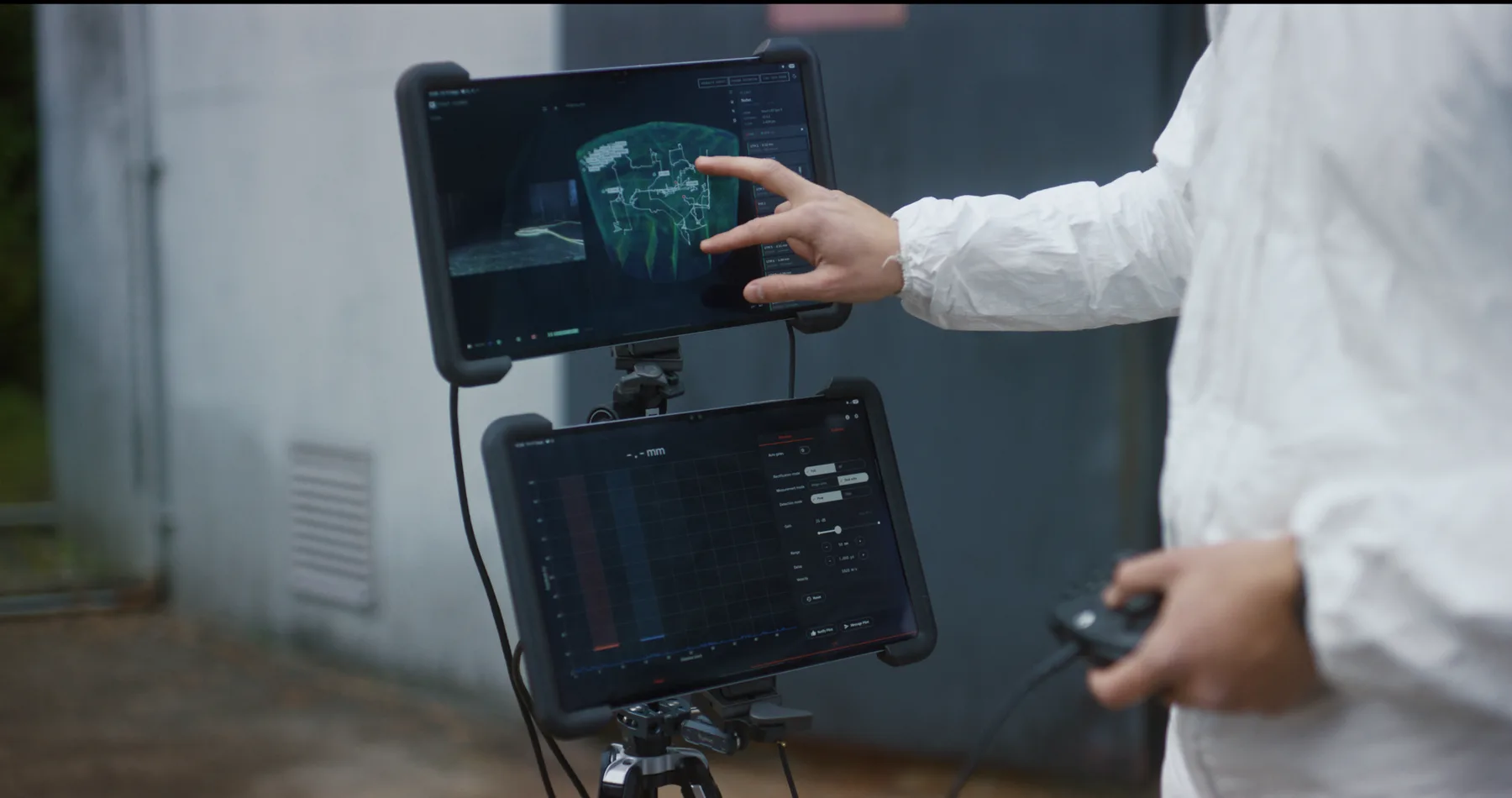
One 14.6″ tablet runs the whole flight — chosen for the operator, not the spec sheet: a big, bright, crystal-clear screen that reads perfectly in any conditions, dark or bright, and powerful enough to run high-resolution live video and the SLAM 3D map at once. Simple to set up and fly, with nothing to charge or swap — connected to the ground station, the whole system stays powered for long missions. Run it on a tripod stand or in a wearable chest vest, with the rugged hand controller for precise flight

“For me as a pilot, I just love the mini-map feature of the Scout App. We can select the working distance, fly really close to the deck transverse and just know it won’t crash with anything.”

Marcio Belleti Chief Pilot TDBR

A Scout 137 Gen 3 flight through a dust-filled industrial tunnel — the kind of low-visibility space that blinds camera-based drones. LiDAR navigation holds steady where there’s nothing for a camera to see.

One tablet flies it. Scout Portal proves it.

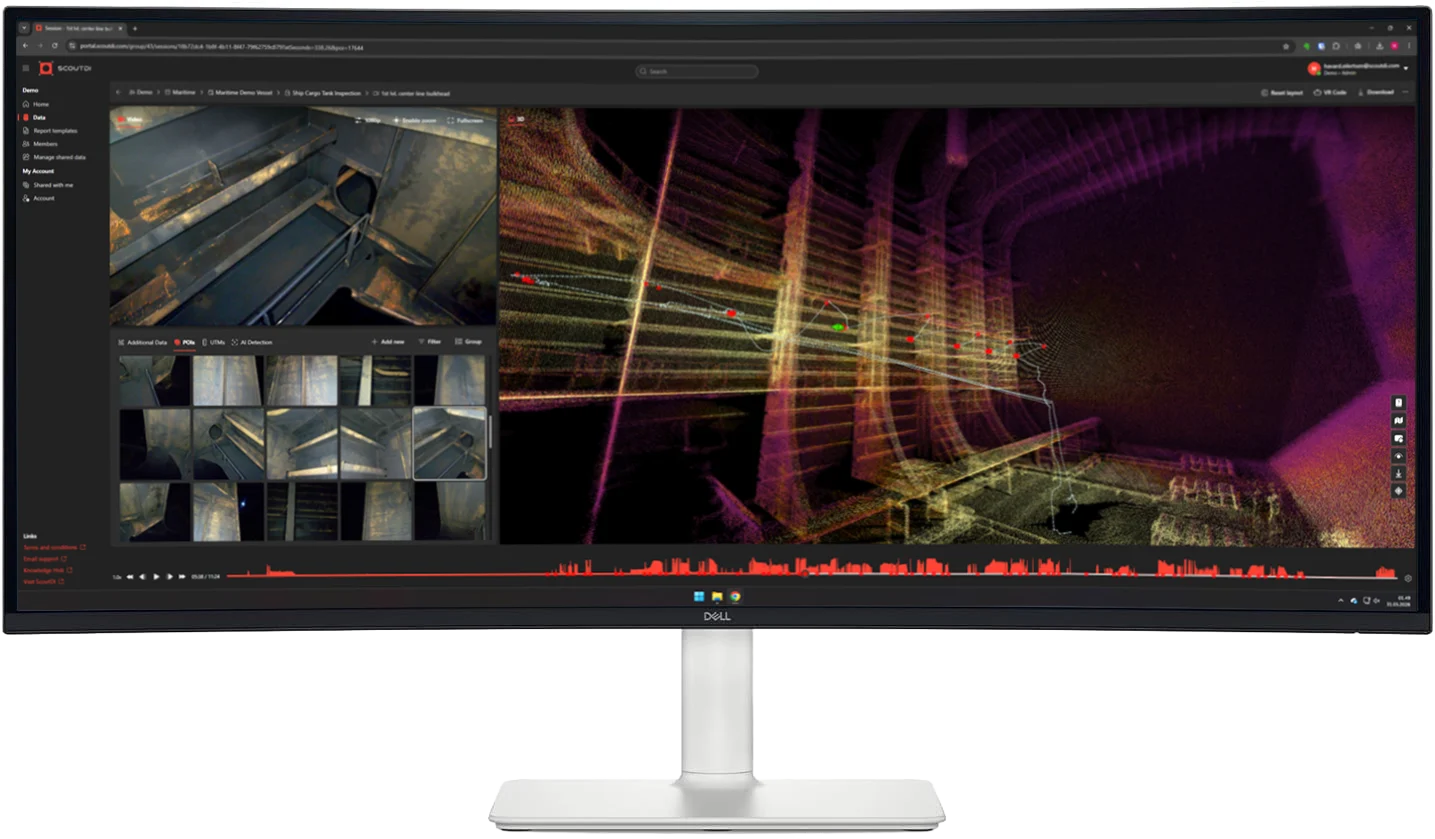
Scout Operator runs the flight in the field. Stream it live to specialists outside the asset, upload the captures to Scout Portal after landing for review and reporting, or do both. Either way it runs in the browser, nothing to install.
01 Set up

Plug into an outlet. Boot in under two minutes; the drone is tethered and powered the moment the cable connects. Run the pre-flight checklist and activate live streaming, and you’re ready to fly.

02 Fly

600 mm minimum opening. As the drone flies in, it builds a live SLAM 3D map and 12 000-lumen LEDs light the dark, while Auto Surface Scan and Auto Line Scan fly the repetitive geometry.

03 Inspect

The pilot keeps the judgement calls while every capture — 4K video and photos, gas readings throughout, optional UT — is tagged to its position on the 3D map and streamable live to specialists.

04 Review & report

After the flight, upload to Scout Portal: replay and review, run AI analysis, then report, archive and share, all in-browser.

Scout 137 Gen 3

Specifications

Drone

Dimensions (drone): 448 × 479 × 262 mm
Minimum access opening: 600 mm (Ø) circular manway
Weight (drone / case): 3 kg / 16 kg
Max lifting distance with UTM Payload: 35 m
Operating temperature: −20 °C to +50 °C
Ingress protection: IP54 (flight electronics)
Data rate: ~25 GB / hour

Ground station

Dimensions: 385 × 440 × 245 mm
Weight (station / case): 10.7 kg / 28 kg
Input power: 200–240 V AC, 50/60 Hz, min 13 A
Ingress protection: IP54
Operating temperature: −20 °C to +50 °C

Navigation & compute

LiDAR: 128-beam Ouster OS0
Sensing range: 0.5 – 75 m (80% reflectivity) 35 m (10% reflectivity)
Field of view: 360°
Onboard computer: NVIDIA Jetson Orin NX

Tether

Length / weight: 60 m 18.5 g/m
Voltage: 400 V DC
Data bandwidth: 80 Mbit/s
Breaking strength: 80 kg
Composition: Kevlar-reinforced, PVC outer / FRP inner

Lighting

Output: Up to 12 000 lumen
Mode: Structured (presets) or per-light

Communications

RF transmitters / receivers: None
GPS / GNSS receivers: None
Data link: Power-line communication (HomePlug AV) over physical tether

Camera

Resolution: 3840 × 2160 (4K)
Optical zoom: 3.5× with auto-focus
Frame rate / FOV: 30 fps 82–25° (zoom-dependent)
Gimbal: 2-axis, ±90° pitch

Compliance

CE marking: CE marked, certified under IEC 62368-1
EMC testing: EMC tested by Nemko (FCC Part 15 unintentional radiator)
Organisation certification: ScoutDI is ISO 9001 and ISO/IEC 27001 certified

The rest of the system

Payloads and software that work as one with the Scout 137 Gen 3.

Which asset do you want to fly into first?

Request a Proof of Concept
Back to top