Workplace EV Charging Administrators can create a better experience for everyone by setting clear, consistent charging …
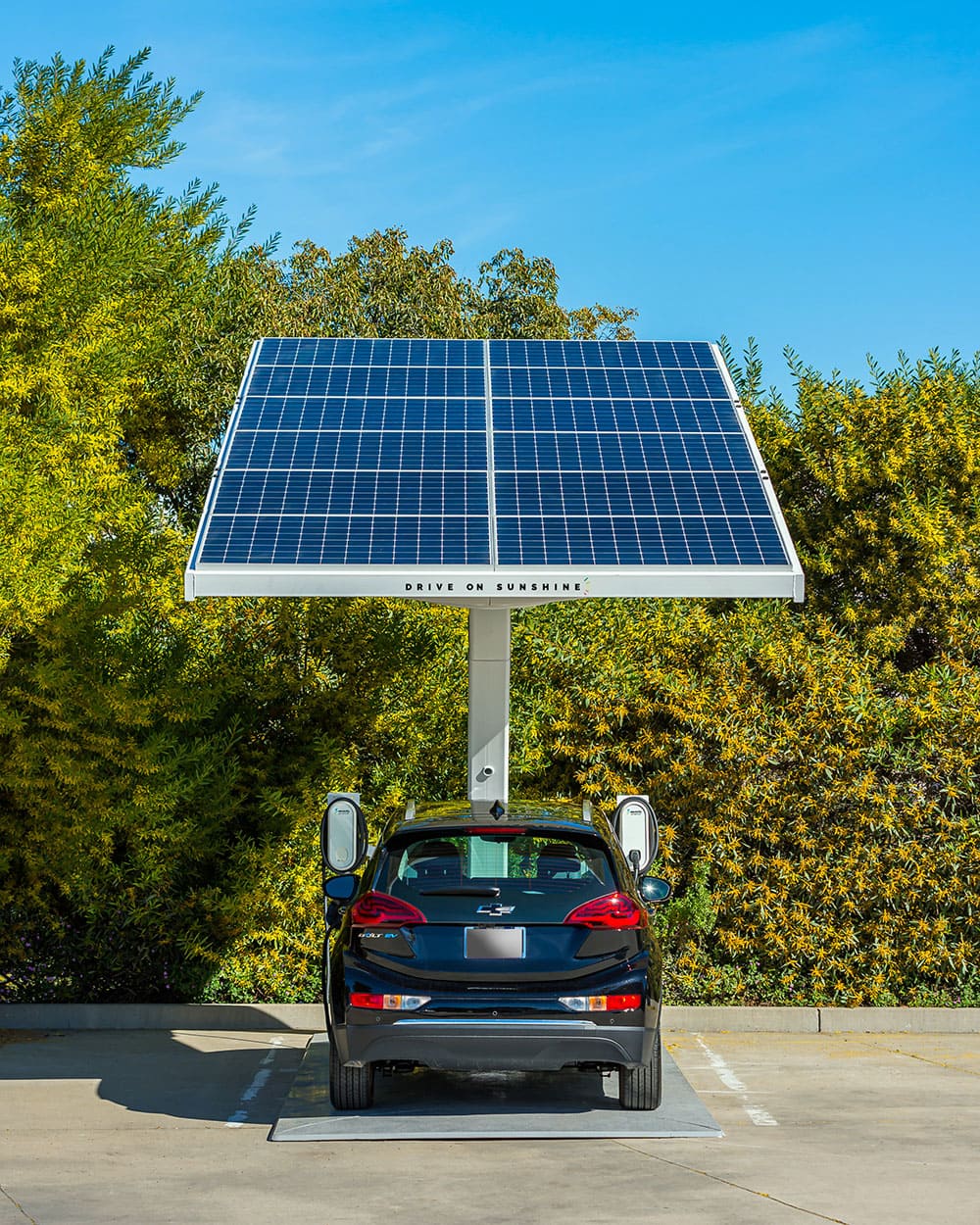
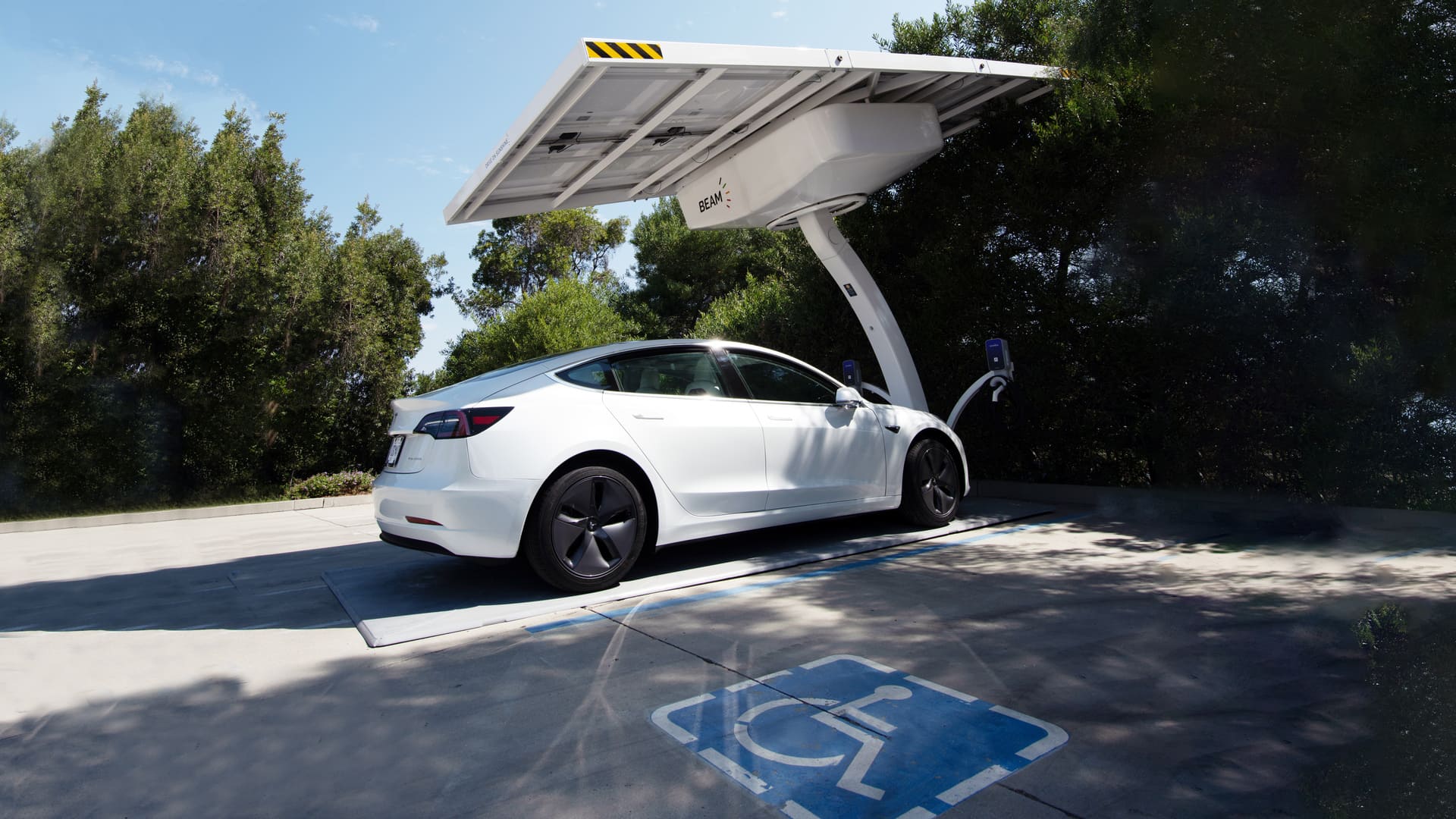
Workplace EV Charging Administrators can create a better experience for everyone by setting clear, consistent charging guidelines. A recommended policy is to allow two (2) to four (4) hours of charging per employee each day, supported by an Employee User Access Agreement for clarity and fairness. Employees are encouraged to view workplace charging as a convenient “top-off” solution during the day, while continuing to rely primarily on home or public charging for their regular refueling needs. This approach helps ensure chargers are available when needed and maximizes the benefit for all EV drivers.


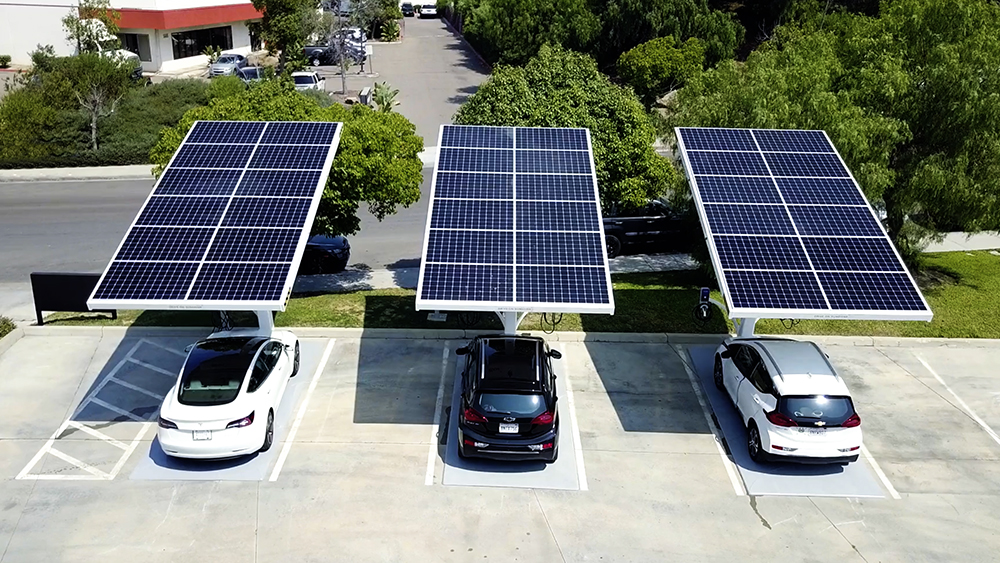
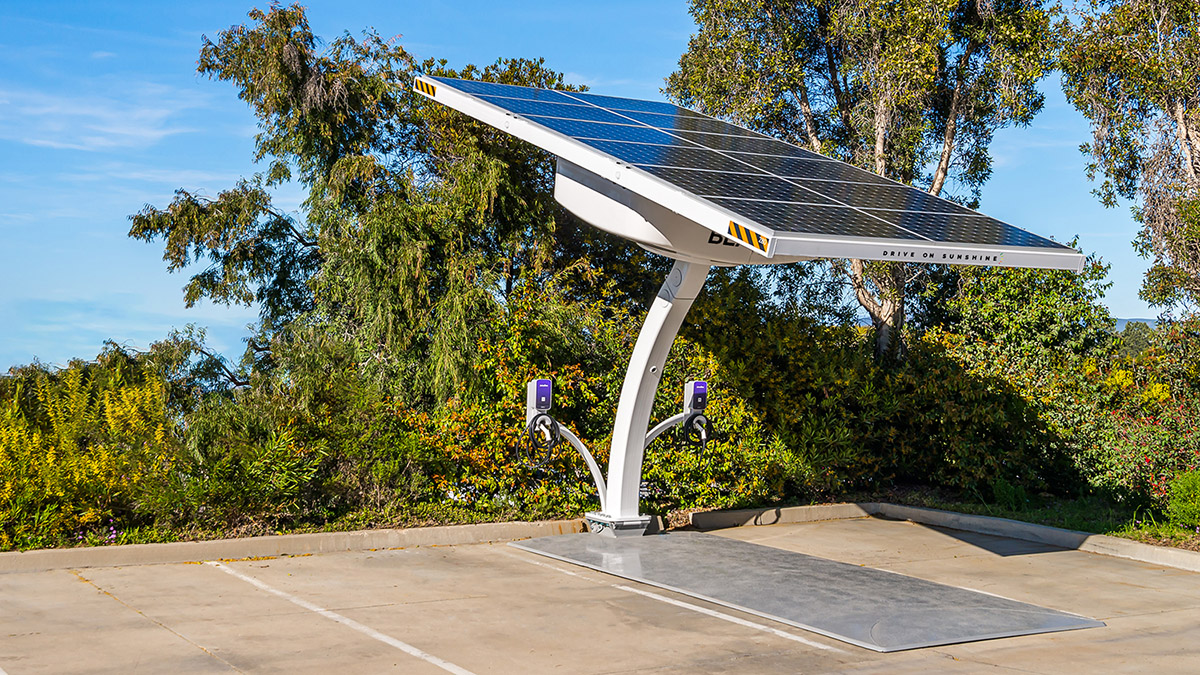
Each EV ARC™ system delivers approximately 6* kW of power, equating to roughly 20 miles of driving range per hour of charging. When one vehicle is plugged in, it receives the full output; when multiple vehicles are charging, the system intelligently shares power across all active ports. With 2 to 4 connections per unit, drivers can expect anywhere from 5 to 20 miles of range per hour, ensuring steady, reliable access to energy throughout the day
This performance closely matches real-world commuting habits. The U.S. Department of Transportation reports that the average American sedan travels about 40 miles daily, and 80% of commuters drive 20 miles or less round-trip. That means a simple 2- to 4-hour session on-site is enough to cover most employees’ needs, making workplace charging both practical and impactful. For organizations, this demonstrates the EV ARC™ system’s ability to deliver meaningful value, supporting sustainability goals, boosting employee satisfaction, and doing so without overbuilding costly infrastructure.
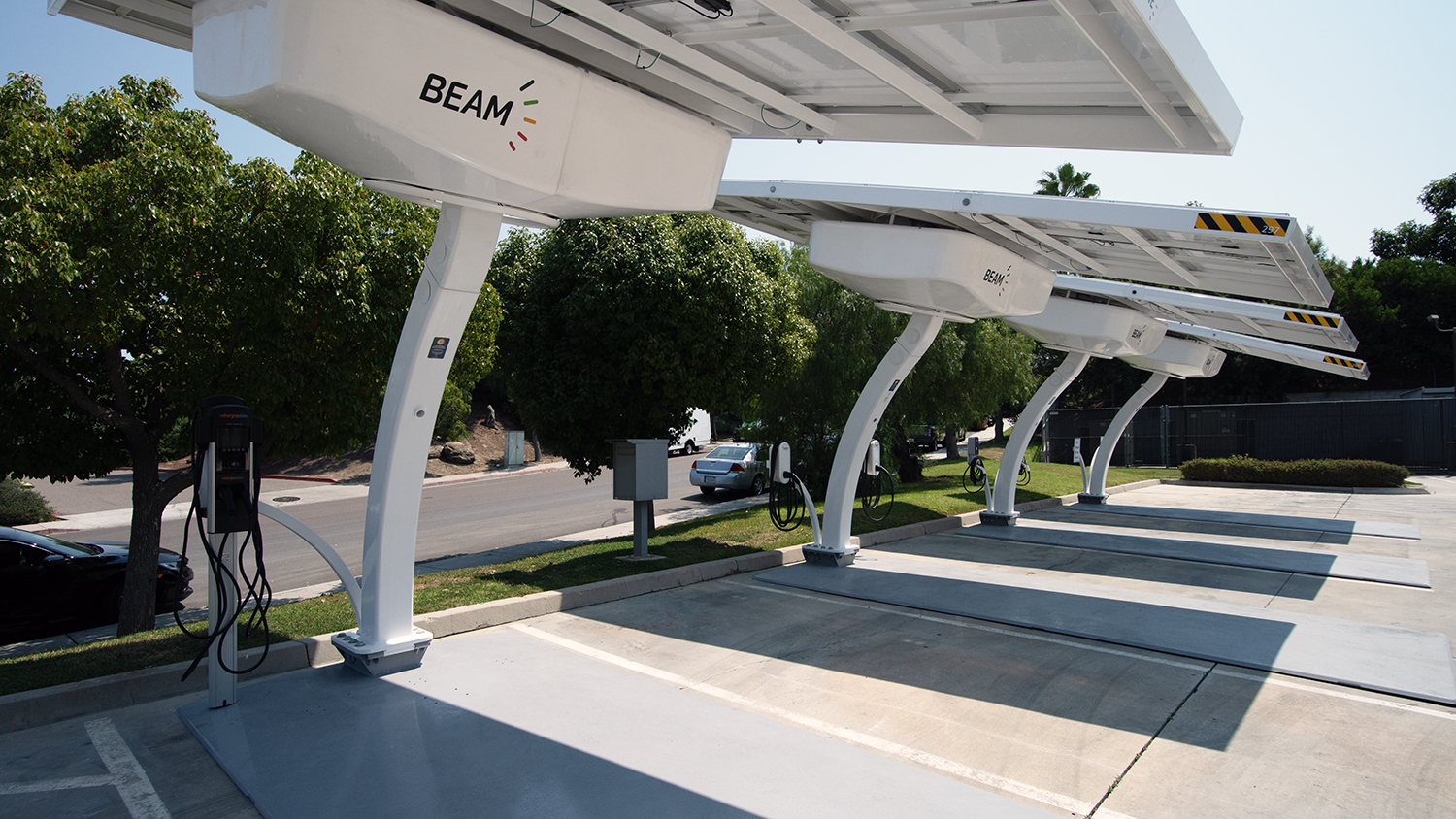
When drivers wait until their EV batteries are nearly depleted, recharging takes considerably more time and energy. By contrast, frequent “top-off” charging keeps vehicles ready for use and helps avoid long charging sessions, saving employees both time and convenience.
This approach is well suited to typical driving habits. Most personal EVs cover about 40 miles per day, yet they are built with ranges of 250–350 miles. Even during stretches of cloudy weather or reduced winter solar production, this generous buffer allows employees to stay comfortably within range. In most cases, their EV’s built-in battery capacity, supported by the EV ARC™ system, ensures reliable access to energy when it’s needed.
And even if an EV ARC™ unit’s internal batteries become fully depleted, indicated by the red “Low Battery” light on the column, employees should still be encouraged to plug in. While charging may not begin immediately, the system automatically resumes as soon as solar energy is available, ensuring no opportunity to refuel is missed.
To keep charging fair and organized, companies can use RFID cards or similar access controls so that only authorized employees can plug in. Assigning a workplace administrator to oversee access ensures smooth operations, from verifying employment to having drivers sign a simple User Access Agreement. These guidelines not only clarify usage expectations but also promote courtesy and consistency, creating a positive experience for all EV drivers.
Because the EV ARC™ is a fully solar-powered, off-grid solution, the amount of energy available each day naturally reflects both recent usage and local solar conditions. Seasonal and environmental factors play a role, with systems typically producing more e-miles in summer than in winter. This variability is expected and highlights the EV ARC™’s ability to operate cleanly and independently, without reliance on the utility grid.
Each EV ARC™ also includes a 120V Shore Power Connection Inlet at the base of the steel column supporting the solar array. This feature allows administrators to supplement the unit with an auxiliary power source when needed, providing a trickle charge to the system’s batteries and ensuring additional flexibility in maintaining energy availability.